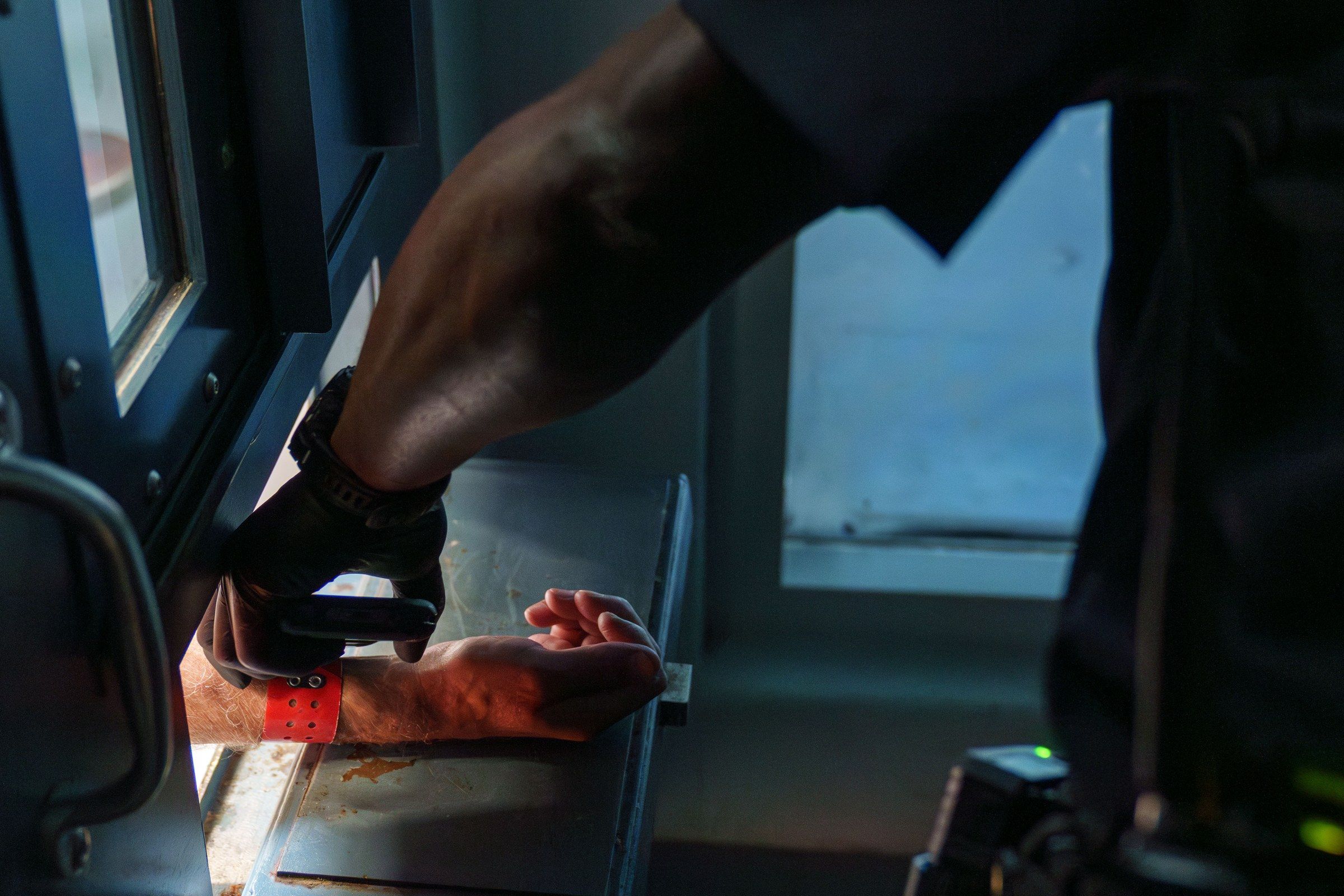
RFID Wristbands: Secure, Durable Inmate Identification
A record you cannot tie to a person is not proof. RFID wristbands put a sealed, non-transferable ID on every wrist, so every contact your officers log lands on the right person and carries a time stamp.

Positive identification
An officer walks up to a cell and has to be certain. Identity should never depend on memory or a printed roster that went out of date at shift change.

Non-transferable
A band that fails early is a gap in your identification coverage, and gaps are where disputes start.

Time-stamped
The check was made. Then a grievance lands six weeks later, and the only proof anyone has is what somebody remembers.
Under 60 seconds
To create and activate.
Wide variety of colors
For classification.
One band per inmate
No duplicates.
The right inmate every time
"I can scan an inmate’s wristband right away, that person pops right up. I have all their information on it and I can enter what I’m doing right then and there."
Jonathan Nelson, Officer
Benton County (WA) Sheriff's Office
'Headcount goes much easier'
"Headcount goes much easier now that we scan wristbands instead of making inmates stand outside their cells until we count everyone. I love having the GUARDIAN RFID system, it is a life saver."
Keysha Phelps, Jail Administrator
Sequoyah County (OK) Sheriff's Office

Four years without a credible lawsuit
"Since implementing GUARDIAN RFID, we have not been sued for any civil rights violations. We are going on four years of not having any credible lawsuit filed against us in this highly-litigated profession."
Chad Wicker, Director of Detention Services
Tate County (MS) Sheriff's Office
See how a band gets built, activated, and scanned in your own booking area.
How RFID Wristbands Work in a Jail
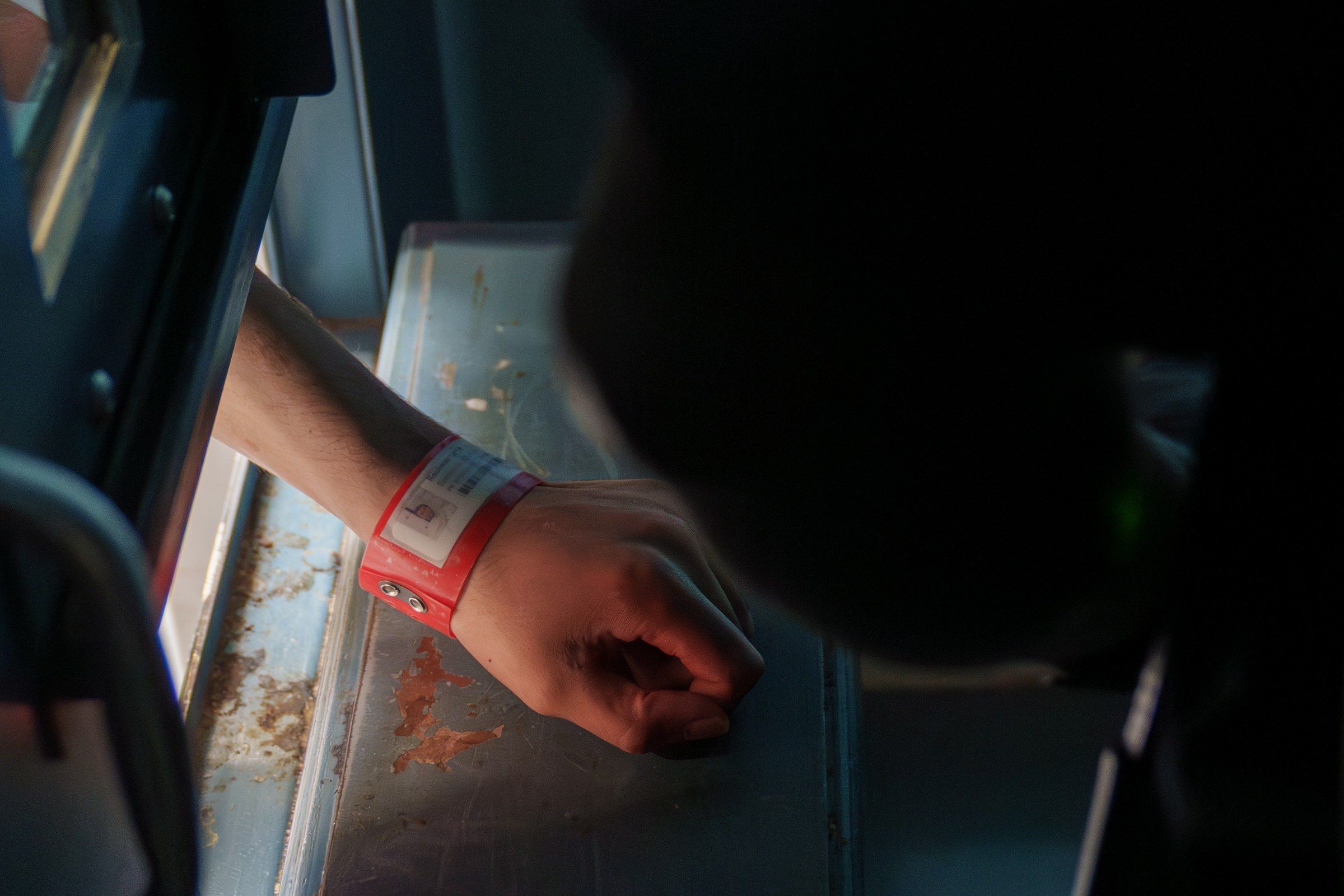
RFID wristbands are laminated ID bands with a sealed passive chip. An officer reads it by handheld. The inmate can't remove or trade it.
GUARDIAN RFID's bands are Clincher Extra Wide, made by PDC, a Brady Corporation. GUARDIAN RFID is the exclusive distributor for corrections.
The insert shows the mugshot, name, and booking and facility details. Lamination protects the chip, so it's RFID's only compatible band type. Barcode and write-on bands are visual-only.
Printed or Laminated?
Laminated wristbands carry an RFID chip and scan history. Printed are better for short stays; visual ID only, no RFID.
Under 500 ADP, wristbands usually win. Bigger or longer-stay facilities often shift to RFID cards.
Either band beats a paper roster: A scan confirms who's actually there.
The two band formats side by side:
| Format | Service life | Carries RFID | Best fit |
|---|---|---|---|
|
Printed / Tyvek band |
3 to 5 weeks |
No |
Short holds, visual ID only |
|
Laminated band |
2 to 3 months |
Yes |
Standard ID under 500 ADP |
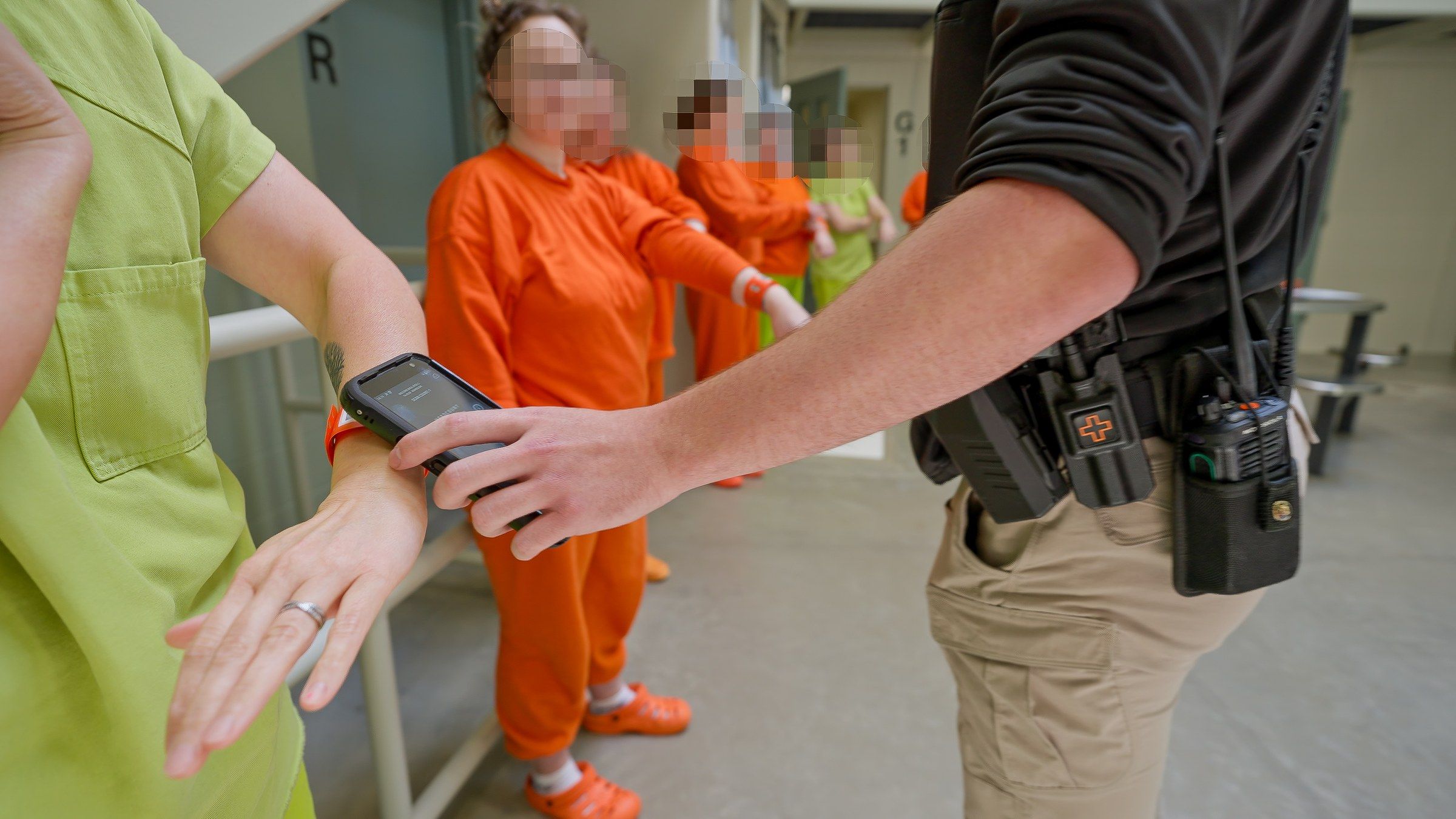
Can An Inmate Remove, Swap, or Duplicate a Wristband?
No, not when sealed, fastened, and fitted right. Metal fasteners resist tampering. An encrypted fingerprint locks each band to one inmate record, so duplication is impossible. Bands survive daily wear, and policy enforces the rest.
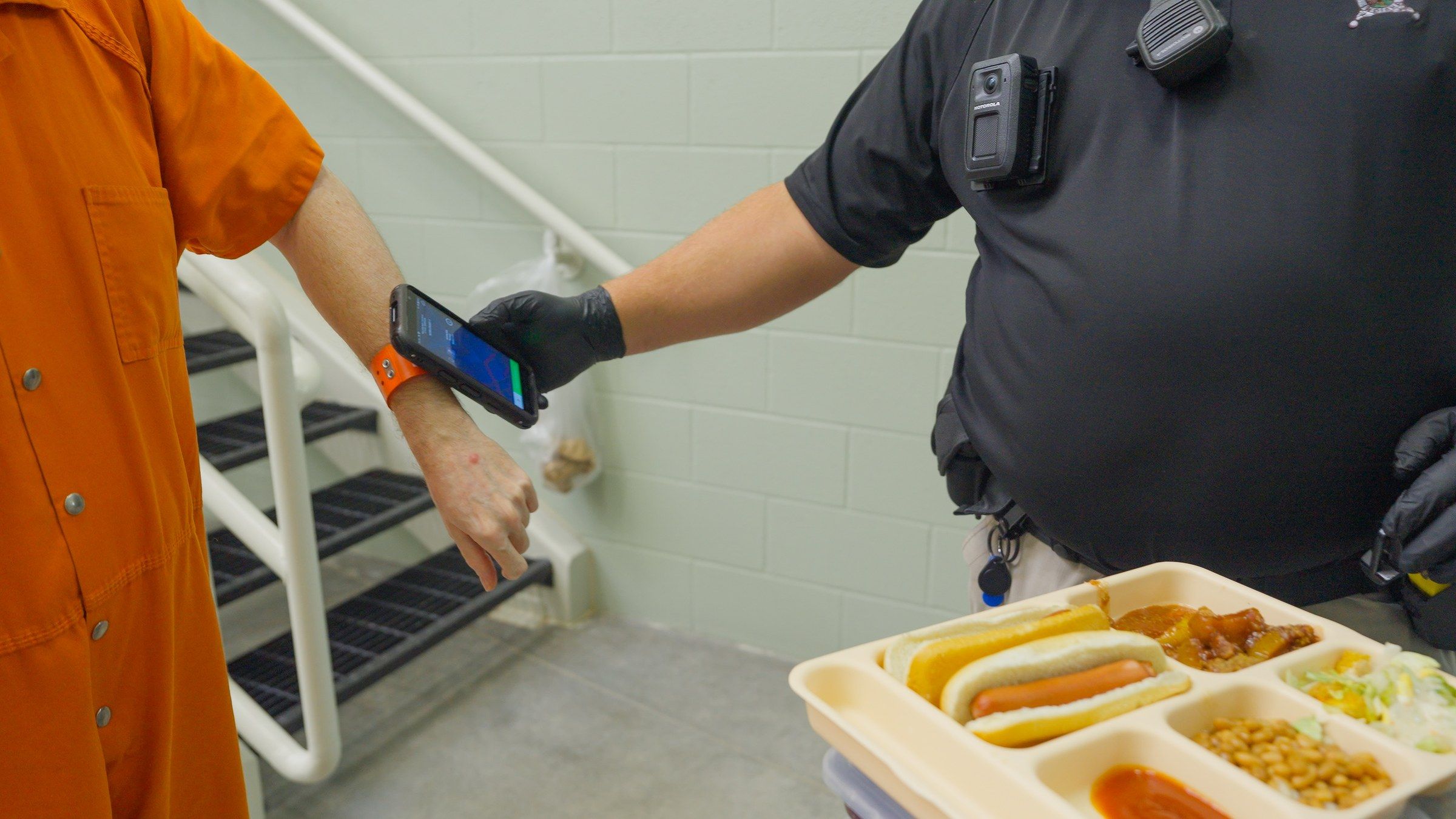
One Scan Documents the Entire Shift
One scan covers headcounts, welfare checks, meds, meals, and movement.
GUARDIAN RFID is the system of execution. Your jail management system is the system of record.
Building and Activating Wristbands
A wristband is only as strong as its weakest link. GUARDIAN RFID pairs a tamper-resistant band with an encrypted RFID chip, so every photo ID ties directly to a verified Command Cloud record the moment it's activated. No card to lose. No swap to fake.
How Do Wristbands Hold Up In an Audit or Lawsuit?
Every scan carries a date and a time. That is the whole answer.
Issuance is timestamped, and so is every contact after it. The result is a chain of custody for each inmate, starting the moment the band goes on the wrist.
For a jail administrator, the value sits in the reporting. Pull compliance by officer, by shift, by housing unit. You are reading data instead of trusting a logbook.
When a grievance arrives, a timestamp closes the question fast. Facilities report shorter disputes and fewer repeats.
What Do Inmate RFID Wristbands Cost?
Cost tracks facility size and edition, not credential choice. Wristbands and cards cost the same, so you pick by population, not budget. For real numbers on your facility, get a cost estimate.
Frequently Asked Questions
Yes. Clincher Extra Wide bands are designed to be worn at all times, including showers, movement inside the facility, medication and meal passes, and transport. The lamination is what makes that possible, because heat sealing the insert inside the pouch keeps moisture off the printed data and the chip. Moisture is still a wear factor over a long stay, and a band sealed at the wrong temperature will fail sooner. Correct lamination is the single biggest driver of how long a band survives.
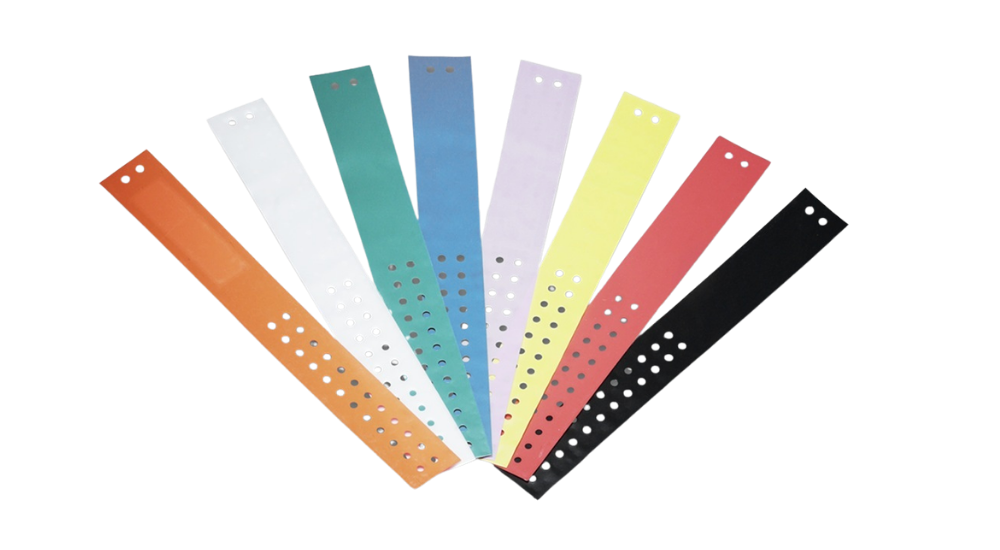
RFID wristbands come in eight colors: orange, white, teal, blue, purple, yellow, red, and black. Color-coding is one of the most practical things you can do with a band, because it lets staff read classification from across a dayroom without a scan. Facilities commonly assign colors by risk category, medical alert, or offense type. Color meaning is set locally, not by any national standard, so document your scheme in policy and train to it. Two facilities in the same state may use the same color differently.
Building RFID wristbands takes both, and neither is exotic. Labels print from the Wristband Report on a Primera LX500 Color Label Printer. Sealing requires a rolling laminator brought to 325 degrees before the first band goes through, and a 12 inch model is recommended if you book in volume. Metal dual-grip fasteners also need a crimping tool, while two-piece plastic snaps do not. Never feed a bare band into a laminator without its sleeve, because it will damage the machine.
GUARDIAN RFID wristbands are Clincher Extra Wide bands manufactured by PDC, a Brady Corporation. GUARDIAN RFID is the exclusive distributor for corrections and supplies the surrounding system: the handhelds that read the bands, the fixed readers, and Command Cloud, where every scan becomes a record. The band on its own gives you identification. The band paired with Command Cloud is what turns each contact into documentation you can report on and defend.
Yes. GUARDIAN RFID integrates with your jail management system rather than replacing it. Think of it as two jobs: the JMS is your system of record for booking, classification, and release, and GUARDIAN RFID is your system of execution for what happens on shift. Inmate data flows in from the JMS, and the scan history, timestamps, and compliance reporting live in Command Cloud. You keep the system your staff already knows and add the documentation layer it was never built to produce.