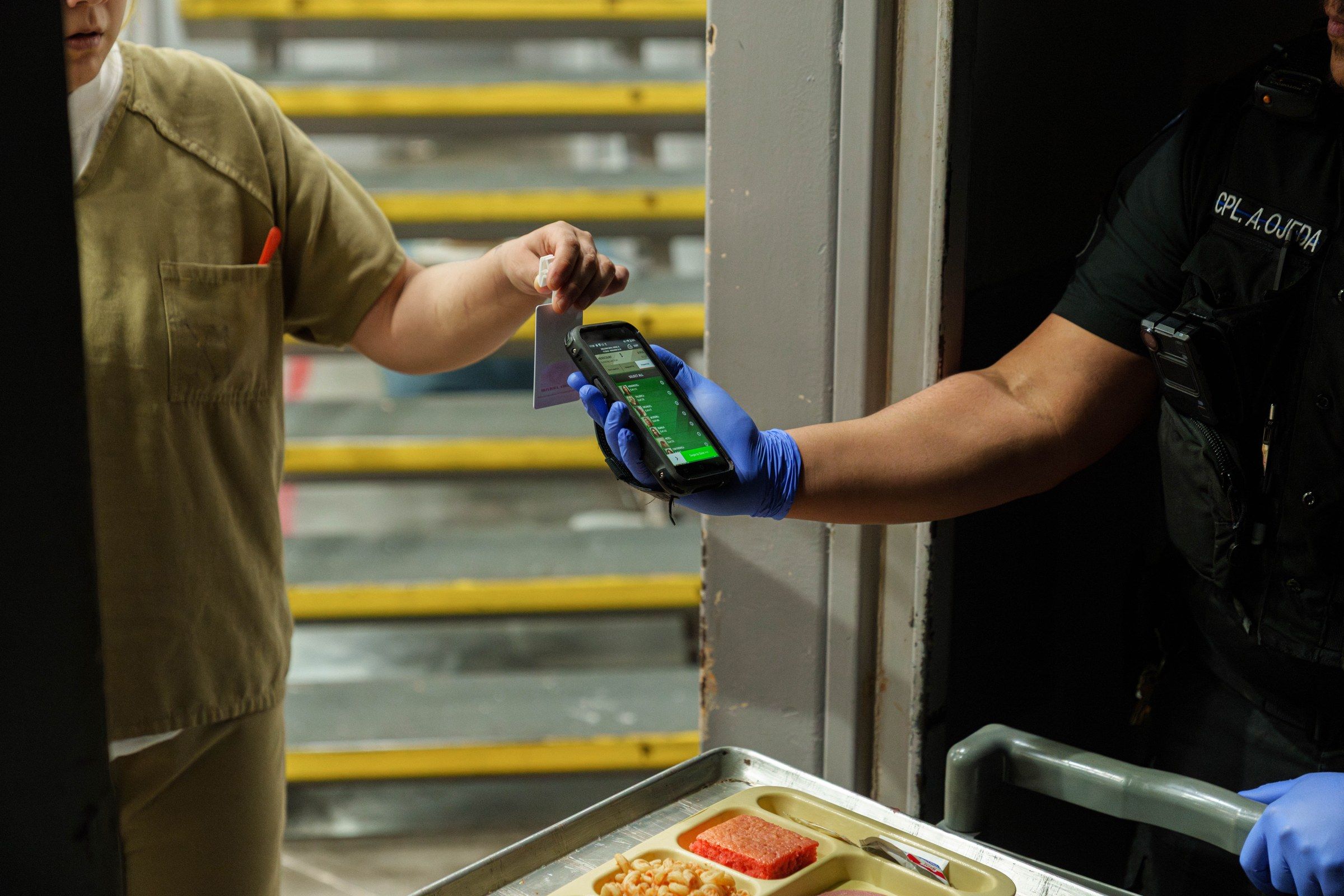
Inmate RFID Cards: Long-Lasting, High-Visibility Identification
Identification your officers can trust on sight.
Your officers should never have to guess. Inmate RFID cards put a verified identity on every inmate, worn where an officer can see it and scan it, and are still in service months from now.
Know exactly who you’re looking at.
Misidentification is where the worst days start. Wrong release. Wrong meds. Wrong transport.
A card that scans turns a face into a verified record before any of that can happen.

The wrong inmate goes out the door.
Release, medication, transport. An ID card carries the verification, so the answer does not depend on who is working that shift.

The credential quits.
A credential that fails mid-stay costs staff hours nobody has. This badge is built to survive the housing unit, so it's still doing its job at month 12.

An attorney arrives.
Nobody remembers a Tuesday six months ago. The record already exists by the time anyone thinks to ask for it.
Nearly 40%
of facilities using GUARDIAN RFID now run cards.
12 to 18 months
Typical useful life of a card.
60%
Reduction in count times using ID cards (source: Baker County, Fla.)

Master count in about thirty minutes
"With the GUARDIAN RFID scanner, they walk by, they scan the ID card, that person is automatically checked off, and so it’s making that master count be completed in 30ish minutes compared to an hour and 15 minutes."
Jim Messer, Lieutenant
Baker County (FL) Sheriff's Office

'The best investment we have ever made'
"GUARDIAN RFID is the best investment we have ever made. In terms of civil liability protection, there is no better product."
Captain Josh Aldrich, Jail Commander
Jackson County (OR) Sheriff Department

The best tool on the market
GUARDIAN RFID is a must have in a Detention or prison facility! In my opinion it is the best tool on the market to document compliance rounds, cell checks, and inmate movement.
Fred Robertson, Chief
Granville County (NC) Sheriff's Office
See how a card moves through booking, headcount, and court transport.
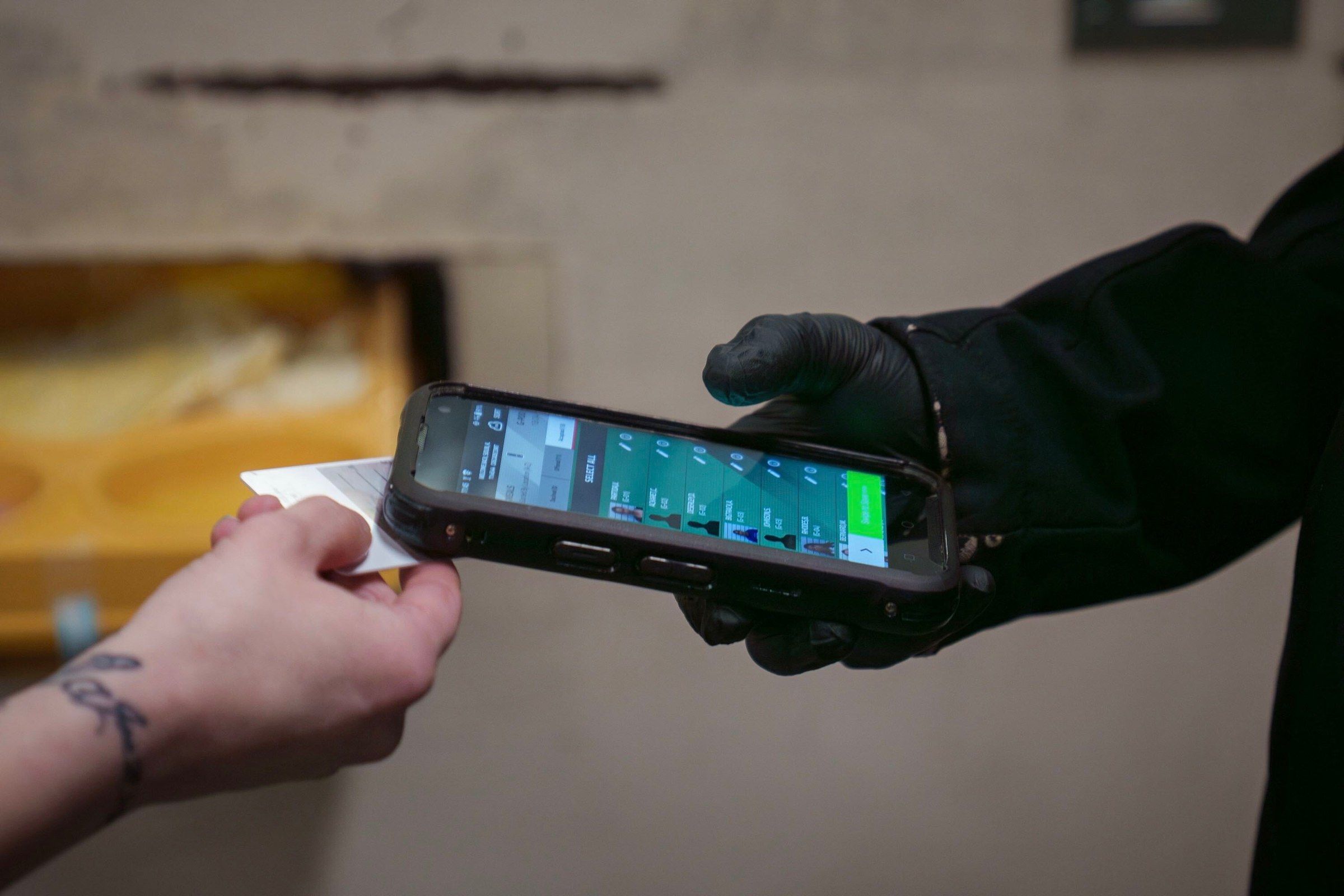
What Is an Inmate RFID Card?
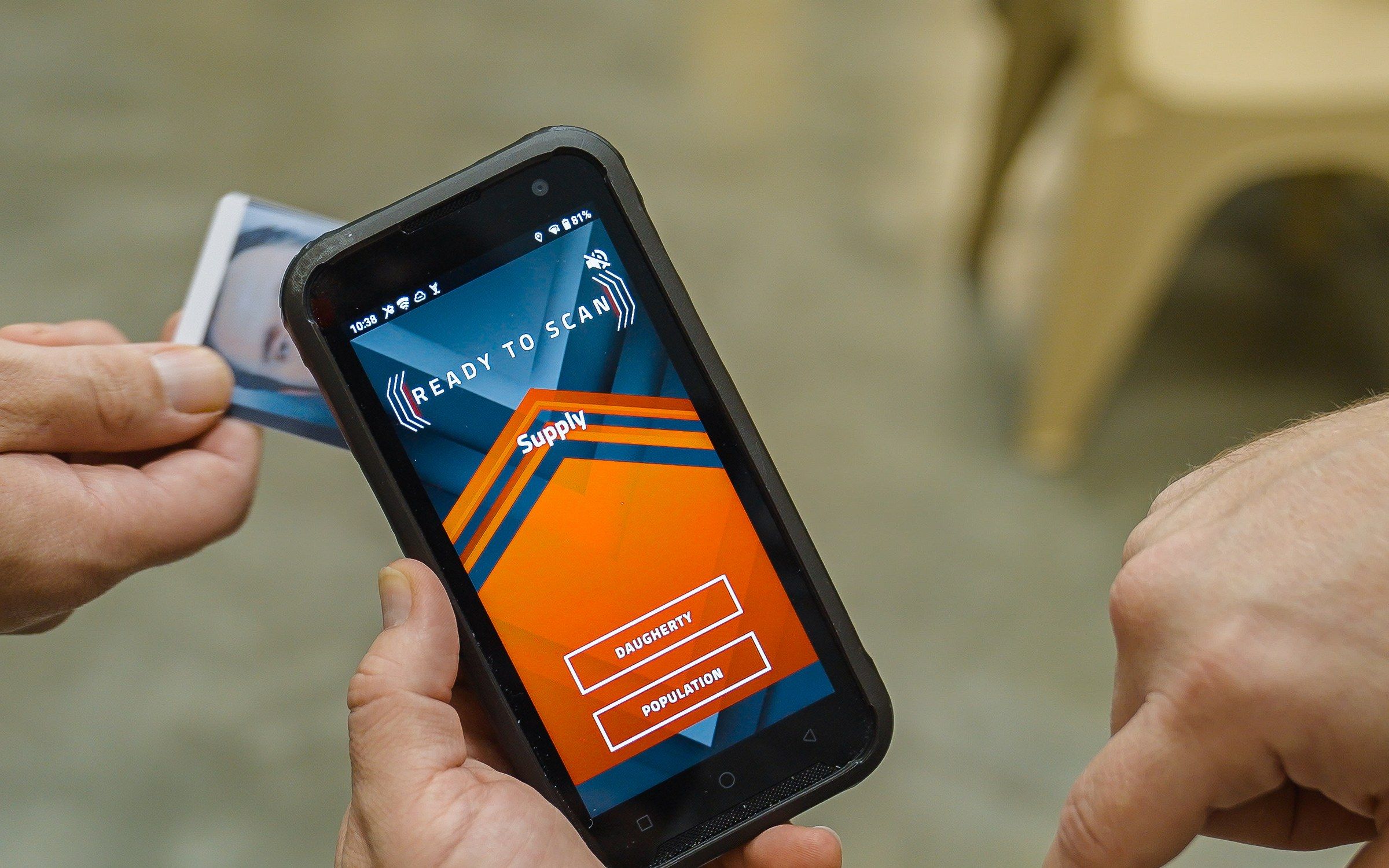
An inmate RFID card is a durable, chip-embedded credential linking an inmate to his or her record. Every scan logs who, where, and when. It clips visibly to a shirt, no wrist access needed. The card prints mugshot, name, booking number, and facility, larger than a wristband for ID at a distance.
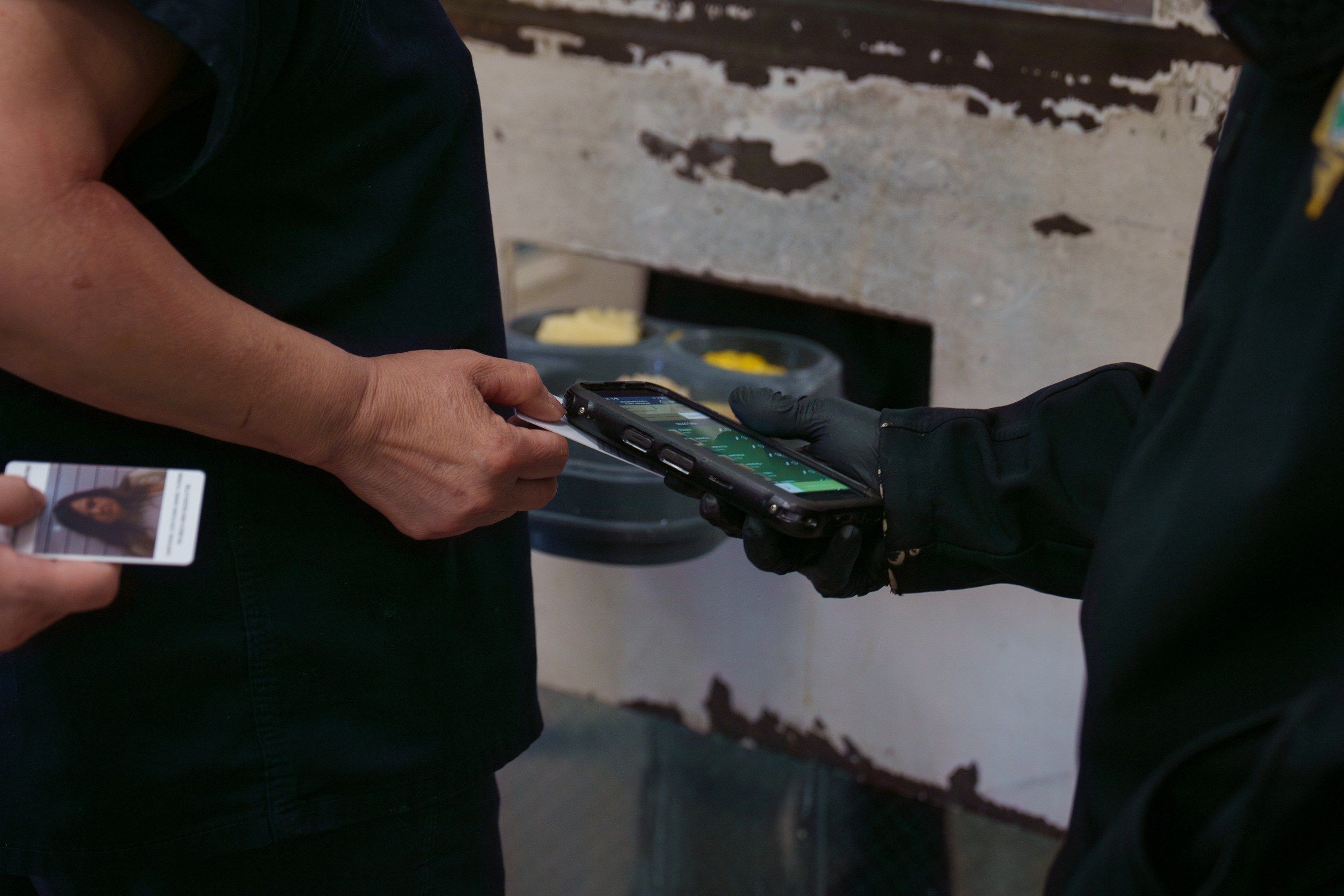
One scan is proof the shift happened.
One scan covers headcounts, movements, meals, pill call, transports, mail, property, and transfers, all on the same credential. Scan, the profile appears, the officer logs the action, the card writes the record. No paper, no memory, no end-of-shift scramble.
Command Cloud rolls them into compliance reporting by unit, shift, and officer. When an inspector asks how you know a check happened, you show them the scan.
Can an Inmate Duplicate or Swap a Card?
Each card carries a unique fingerprint, and only one is active per inmate at a time, so duplication isn't the risk. Swapping is possible, since a card clips to clothing rather than fastening like a wristband.
But the real problem is forgetfulness, not fraud. Inmates leave cards behind, stalling transports and meals. Facilities fix that with policy by tying privileges like commissary and visitation to carrying the card.
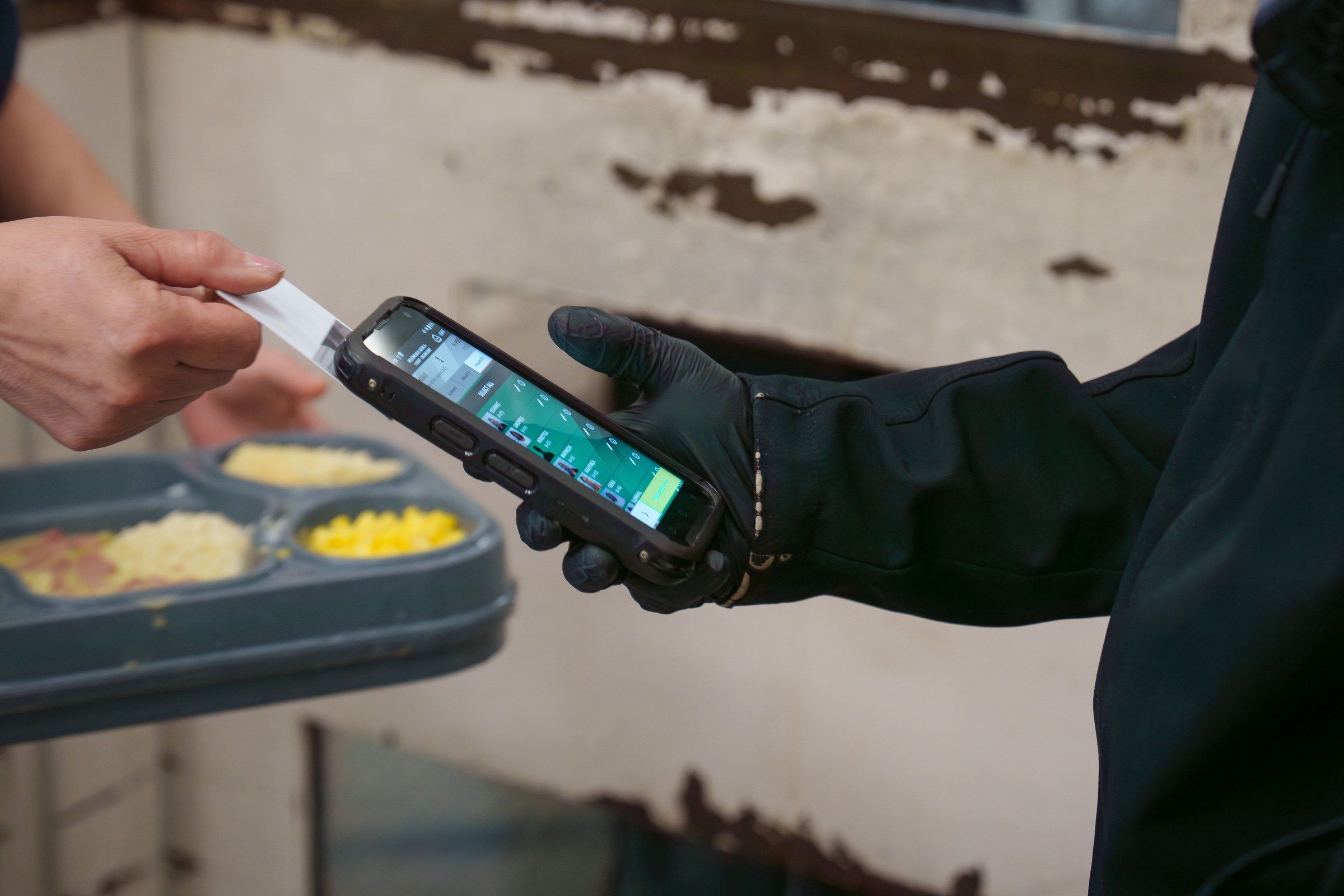
Cards or Wristbands: Which Fit Your Facility?
Start with average daily population, which settles most of this before comparing features.
Two things push facilities to cards: costly wristband rebuilds, and DOC standards, because aligned credentials travel with the inmate. Cards win for sentenced and juvenile populations, DOC-aligned jails, and failed wristband programs. RFID wristbands still win when the credential must be physically secured, not just carried.
Cost is equal either way. Here's how the two compare.
| Criterion | RFID Cards | RFID Wristbands |
|---|---|---|
|
Typical facility |
ADP over 500. State DOCs, midsize and large jails. |
ADP under 500. |
|
Useful life |
12 to 18 months. Several years with care. |
2-3 months when done right. Higher replacement rate. |
|
Secured to inmate |
No. Clipped to clothing. |
Yes. Metal fastener. |
|
Moisture exposure |
Low. Not worn on the wrist. |
High. |
|
Mugshot size |
Larger than a wristband. |
Smaller. |
|
Assembly |
Print, activate, clip. |
Print, laminate, crimp. |
What It Takes
Two required pieces: a Zebra ZXP Series 7 Pro printer and a USB RFID Activator, plus optional ID card clips. Wristbands need a printer, activator, laminator, and crimper: more to fail.
Maintenance: clean the feeder path every 1,000 cards (guide).
Switching? Your JailOps account manager credits unused inventory toward card accessories.

How Do Inmate RFID Cards Hold Up in Litigation?
A scan writes who, what, and when; not a recollection, not an end-of-shift signature. Pull one inmate, one day, and answer an attorney's letter with a log.
Location tracking shows where a tag was. A scan proves an officer was there, doing a specific thing.
Command Cloud is the system of execution. Your jail management system is the system of record. The card ties the action to the person.
What Do Inmate RFID Cards Cost?
Cost tracks facility size and edition, not credential choice. Cards and wristbands cost the same, so you pick by population, not budget. What moves your total: credential, printer, activator, reissue frequency. Reissue volume is the lever you control: fewer reprints, trips, and rebuild hours. For real numbers on your facility, get a cost estimate.
Frequently Asked Questions
Yes, facilities switch from RFID wristbands to inmate RFID cards regularly. Contact your JailOps account manager to start. Tell him or her what is left in unopened wristband inventory, including boxes and unused label rolls. Those materials are credited toward card accessories, so you are not writing off what is on the shelf. On the card side you will need a card printer and an activator.
Twelve to eighteen months is typical. Cards handled well can last several years. Three things drive the spread. Moisture is the big one, and a card clipped to a shirt sees far less of it than a credential worn on a wrist. Print quality is second, which is why the printer matters more than most facilities expect. The third is the inmate. Populations that handle cards carelessly cycle through them faster, and policy is what changes that.
Inmate RFID card creation runs inside the booking workflow rather than as a separate task somebody schedules for later. Pull the record, print the face, activate the chip, clip it on. One officer, one station, no handoff to another shift. That matters most during intake surges, when the credential has to keep pace with the door.
Yes. Command Cloud integrates with your jail management system rather than replacing it. The JMS stays the system of record for booking, charges, and release. Command Cloud is the system of execution, capturing what happens on the floor and writing it back where a two-way interface is supported. EMR and offender management integrations follow the same pattern. See integration partners for the current list.
Yes. Officer ID cards and key fobs print and activate on the same Zebra printer you use for inmate credentials. One piece of equipment, one workflow, one supply chain. Staff credentials also give you officer-side scanning, so the record shows which officer performed an action rather than only which device was used. No second printer, no second vendor.
No. Cards are scan-based, not continuous. A record is created when an officer scans at the point of responsibility, not when someone walks past a receiver. That is a design decision, not a limitation. Continuous tracking tells you where a tag was. A scan tells you an officer was there, doing a specific thing, with a specific inmate, at a specific time. When a claim is filed, that is the record that answers it.