10 Transformations Modernizing Correctional Operations

Alyssa Pfaff
13 October 2026
Modernizing corrections is more than just implementing new visitation booths or painting a mural on a wall; it’s replacing legacy custody practices with technology, program design, and facility layouts that measurably improve safety and security. When an officer is expected to carry out in a twelve-hour shift a job designed decades ago, they are inevitably set up for failure. The gap between how a facility is expected to operate and how it actually operates is exactly where liability lives.
This blog covers ten transformations facilities across the country have already put into practice. Some of these are technology. Some are architecture. And one of them is a butterfly. Let’s get into it.
1. The Airspace Arms Race
Contraband no longer enters only through the sally port. Drones drop weapons, phones, and narcotics straight into recreation yards, and facilities are answering with counter-drone systems that never fire a shot.
Platforms like EnforceAir2, built by D-Fend Solutions, use radio frequency detection to take control of an unauthorized aircraft in flight, land it safely, and report the coordinates of the operator standing outside the fence. Drone incursions and sightings at Federal Bureau of Prisons (BOP) facilities rose from 23 in 2018, the year BOP began formally tracking them, to 479 in 2024, and only 64 of BOP's 121 federal facilities had detection systems installed.
2. Butterflies Behind Bars
Starting in 2012, incarcerated women at Mission Creek Corrections Center for Women in Washington ran a captive-rearing program for the Taylor's checkerspot, a federally endangered butterfly that had nearly vanished from the South Puget Sound prairies.
Sixty-eight women served as butterfly technicians over thirteen years, raising more than 75,000 larvae for release onto Salish lowland prairie and earning up to 30 college credits from The Evergreen State College along the way.
When budget cuts closed Mission Creek in September 2025, the program did not end. Staff drove back through the winter to feed the overwintering larvae, then moved them 40 miles to Washington Corrections Center for Women, where the same technicians were waiting.
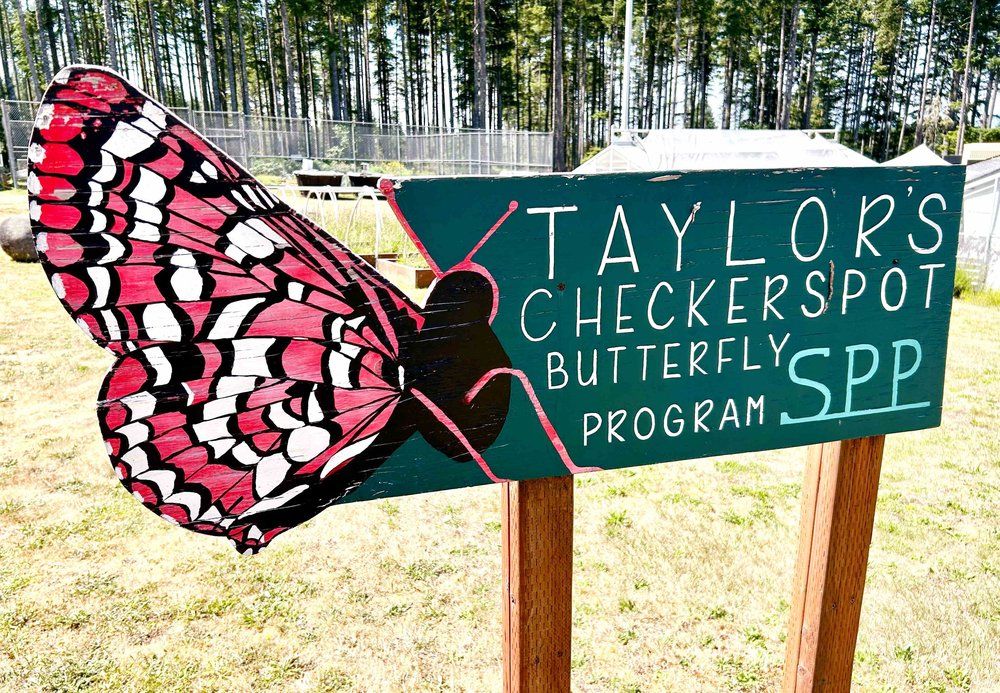
Image credit: https://doc.wa.gov/news/2025/saving-world-one-butterfly-time#photoGallery
3. Virtual Reality Therapy
Facilities including Folsom State Prison are putting VR headsets into recreation therapy. At Folsom, a recreation therapist uses guided breathing on a virtual beach to help incarcerated individuals with PTSD, stress, and anxiety build coping skills, and lets them practice navigating crowded public spaces before release.
A parallel line of work, Virtual Reality Aggression Prevention Training, places participants in interactive avatar scenarios to rehearse emotional control and de-escalation.
4. Smart Watches for Inmates
To combat overdoses and in-custody deaths, jails are giving their most vulnerable detainees secure wearable smart bands, typically those arriving at intake who are detoxing, on suicide watch, or housed in a high-acuity unit. These devices continuously monitor heart rate, blood oxygen, skin temperature, stress, and sleep in real time, instantly alerting staff over a dedicated radio frequency.
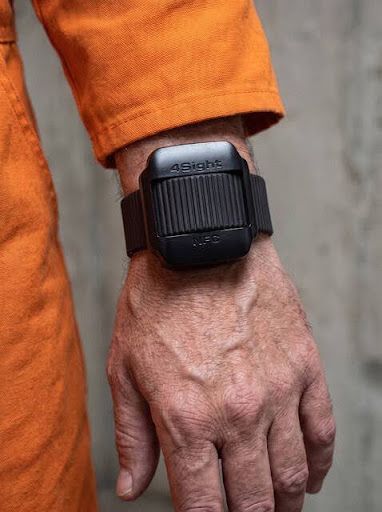
Image credits: 4Sight Labs
5. The Scandinavian Experiment
American prisons are taking notes from Northern Europe. At Pennsylvania's SCI Chester, corrections officials partnered with researchers from Drexel University and the University of Oslo to build "Little Scandinavia," a general population unit with single cells, custom furniture, a communal kitchen, and outdoor green space.
Six men moved in during 2020, and the unit reached full capacity in November 2022. Officers assigned to it traveled to Norway to work alongside peers there and trained in conflict resolution and suicide prevention.
Staffing runs one officer per 64 men, half the ratio of the rest of the prison, and new residents are chosen by lottery so that anyone at SCI Chester is eligible. As Drexel's Jordan Hyatt puts it, "This is not an honor block. This is not a specialized housing unit."
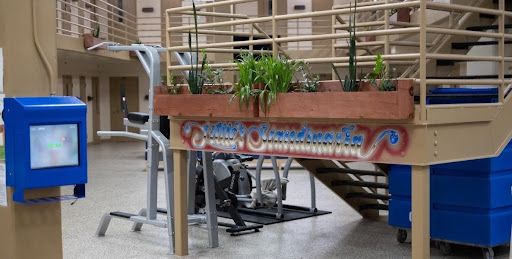
Image credits: Pennsylvania Department of Corrections
6. The "Blue Room"
Environmental deprivation in restrictive housing does real psychological damage, and staff absorb the consequences every shift.
In 2013, ecologist Nalini Nadkarni worked with staff at Snake River Correctional Institution in Oregon to paint a recreation room light blue and project high-definition video of forests, beaches, and Earth from space. It became known as the Blue Room, offered to men in solitary confinement who appeared agitated or on edge. Men who watched the videos reported better moods and committed 26% fewer violent infractions than those who did not.
Time magazine named it one of 2014's top 25 inventions. Later work at the University of Utah measured the effect physiologically, finding that nature imagery and even nature sounds alone lowered cortisol in incarcerated participants.
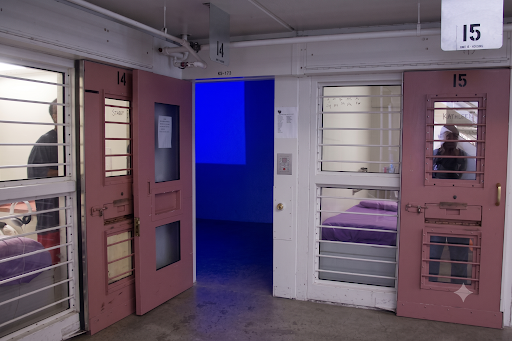
Image credit: Eric Risberg / Associated Press
7. AI Is Listening
For decades, monitoring inmate calls meant a human with headphones and a shift's worth of time. Robert Hood, who ran Colorado's ADX Florence supermax, put it plainly: "a very small percentage was monitored, and it was done after the fact, when there was a crime." Speech recognition changed the math.
Systems like LEO Technologies' platform, built on Amazon transcription, index every call and flag the ones worth a human's attention, with embedded investigators feeding the database regional prison slang that turns over year to year. "We've taught the system how to speak inmate," one LEO executive said.
In a National Institute of Justice study of the nation's roughly 7,000 correctional institutions, unmonitored inmate communication ranked as the third most pressing priority, behind only contraband markets and attacks on security infrastructure.
8. The End of the Payphone
Access to a phone is access to family, money, and a lawyer, and rationing it by hallway queue created exactly the pressure you would expect. As of January 2021, San Quentin State Prison had roughly one phone for every 33 people. Since 2017, many states have signed tablet contracts with Securus or ViaPath, and by 2022 at least 25 states had deployed tablets, letting people call from their own devices across a much wider window of hours.
9. Tearing Down the Bars
The traditional jail layout of iron bars and long isolated corridors is a design decision, not a law of nature. In 1974, three federal Metropolitan Correctional Centers opened in New York, Chicago, and San Diego as the first jails ever planned around direct supervision.
Instead of watching from behind a barrier, an officer works inside an open dayroom with the population. Housing pods run 48 to 64 beds, the range the National Institute of Corrections identifies as efficient to staff, and the officer manages by presence rather than reaction, intercepting conflicts at the disagreement stage instead of the assault stage.
Researchers studying these facilities found sharp reductions in assaults, suicides, graffiti, and vandalism compared with traditional jails. Fifty years on, it remains the single biggest architectural bet American corrections has made.
10. The Green Prison
A prison never closes. That makes it one of the most energy-hungry buildings a state owns.
Coyote Ridge Corrections Center in Connell, Washington, became the first correctional facility of its size to earn LEED Gold, the U.S. Green Building Council's mark for high-performance buildings. What the state reports:
32% less energy
32% less water
96% of construction waste recycled or reused
46% recycled materials
A rooftop solar array spanning 16,929 square feet
None of it is a comfort measure. Utilities come out of the same fund that pays for staffing.
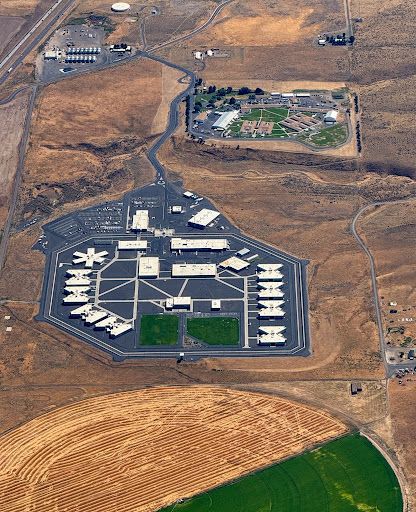
Image credits: Washington State Department of Corrections
You may also like these
Related Posts
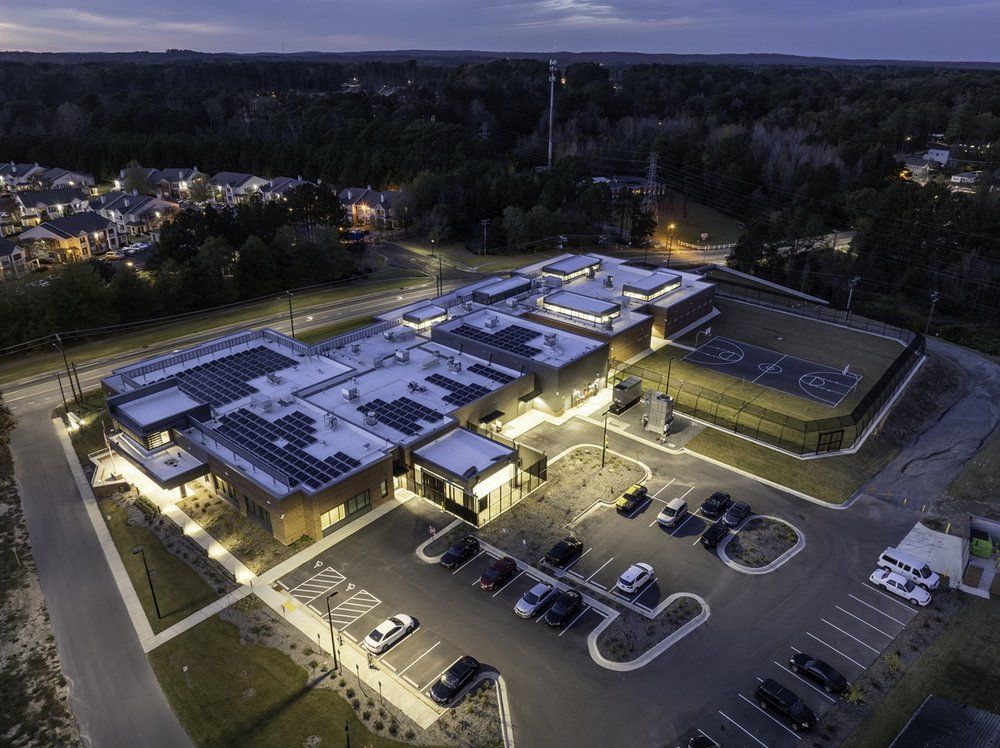
‘We’re Not in the Business of Warehousing People’: The Redesign of American Corrections
How Can Facial Recognition Help My Jail or Prison?