'Reentry Starts the Day the Handcuffs Come Off': What Rehabilitation Actually Takes
Tyler Robinson served 10 years in Kansas. Donna Shetler spent decades inside prisons preparing people for the year they would walk out. One of them lived the gap between finishing a sentence and being ready for what comes after it. The other has spent a career trying to close it.

Alyssa Pfaff
10 November 2026

It was two o'clock in the morning, and Tyler Robinson was standing in a Walmart, looking at cereal.
His first day out of prison had started about 20 hours earlier, at 5:30 a.m. He had walked out of the gate into the worst snowstorm Kansas City had seen in 30 years, ate breakfast at IHOP with the family members who came to meet him, and spent the rest of the day between his new house, the parole office, registration, and the errands that come with proving you exist again.
Then, his father decided they needed to go to Walmart.
It should have been the easiest stop on the list. But for 10 years, Robinson had ordered his food off a single sheet of paper with three kinds of cereal printed on it. You check one, send it in, and somebody brings it to you.
Standing in front of an entire aisle of options, he could not make himself choose.
"I don't even know," he said. "I'm so overwhelmed right now I don't even know what to look at."
That kind of paralysis is far more common than it sounds, and the people who do reentry work see it constantly. Donna Shetler spent decades inside prisons as an adult educator, counselor, and reentry specialist, and she has watched version after version of it play out in a person's first hours home.
"The thing that surprised me the most was taking a man to Target for new clothes and groceries and seeing him freeze up and cry because he is so overwhelmed," she said.
What she is describing and what Robinson lived are the same gap, and neither has anything to do with whether a person was ready to change. Ten years incarcerated had prepared Robinson for everything except the moment he was no longer in custody.

Two Roads Nobody Planned to Take
Robinson and Shetler ended up doing the same work from opposite directions, and neither of them planned on it.
Robinson's road started in 2017, while he was still inside Lansing Correctional Facility in Kansas with years left to serve. He and another man were working through a stack of books and made a rule for themselves: every time they finished one, they would write to the author. Brené Brown. John Maxwell. Letters leaving a correctional facility, stamped as such, landing on desks that may have never received one.
Most went unanswered. Which was what they expected.
Then Danny Creed wrote back.
Creed had spent a career in leadership and business coaching. Rather than simply answering the letter, he came into the facility to meet them, and then he kept coming back. He told Robinson and his friend Mike, who was serving time alongside him, that they could do this kind of work themselves.
They told him he was wrong. He put them through the same training he had done anyway, and he has never charged either of them a dollar for any of it. Three days after Robinson's release, a text arrived to a number he had never given out.
Hey, you can't ignore me for very long. When are we going to meet?
They met. Creed kept up his encouragement. Eventually, it took.
"He's kind of the one that was like, ‘you guys can coach, you guys can do this,’" Robinson said.
A couple of years later, Robinson and Mike founded ROCK Solid Coaching & Consulting, the leadership and business coaching practice they run together now. Creed is still Robinson's coach.
"Every good coach has a great coach," Robinson said. "I'm not a great coach yet, but I'm a good coach, and I'll get to a great coach, because I have a great coach."
Shetler came to corrections from a career that had nothing to do with it. She spent years in corporate leadership development, running assessment centers that put management candidates through a day in the life of the job.
What she found, over and over, was that most of them did not need more training. They needed a coach. That distinction became the thing she built the rest of her working life around.
"This is where I became a believer in leadership development," she said. "If a young professional right out of college could be transformed into a leader, I believed it could work with anyone."
She got the chance to test that sooner than she expected.
Her company's headquarters had a visitor, a well-known politician who had served time in prison. He asked whether the same program she ran for young managers would work on gang leaders in a supermax.
Nothing in her career had pointed her in that direction.
"Going to work in the prison was super unexpected," she said. "It came out of the clear blue. I could have never imagined myself even going into a supermax prison."
She took on the challenge anyway, with one condition. She wanted to bring two coaches in with her.
"I felt like it was a call," she said. "Let's give it a try. What if it can help somebody change their life and do the right thing?"
What she taught that first class of 10 was exactly what she taught corporate managers. What surprised her was how little she had to change.
"They had the exact same skills as some of the managers we had in the corporation," Shetler said. "They got to the fork in the road, and they picked the wrong side to go down."
Several years later, someone called and asked whether she would run the program again, this time on a Department of Justice grant.
What she thought was a one-time assignment became the rest of her career.
Reentry Starts Too Late
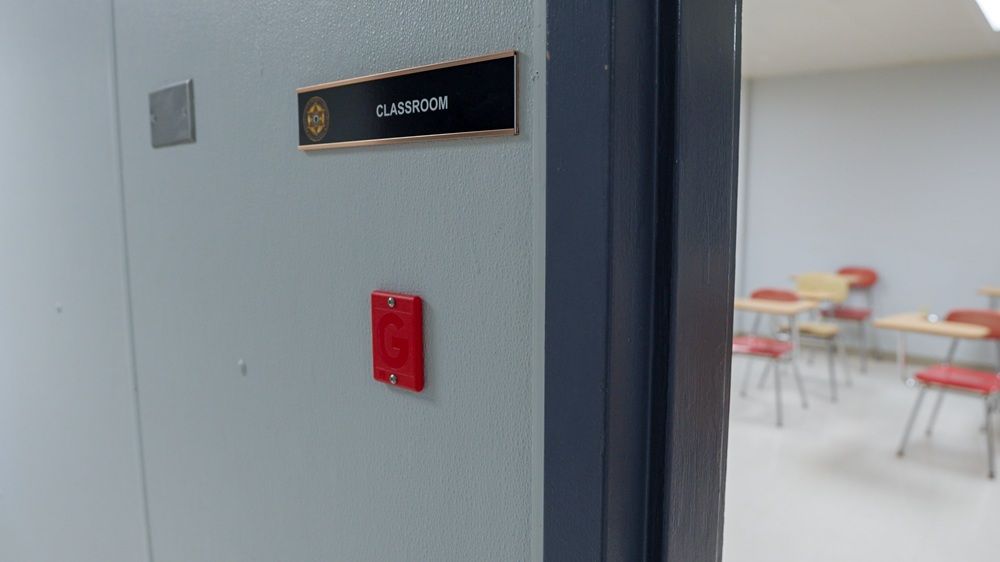
Neither Robinson nor Shetler argues that rehabilitation fails when facilities try it. Their frustration is that facilities wait so long to start.
Robinson got into the program that changed his life with 18 months left on a 10-year sentence. Even then, the program had to make an exception to take him, because 18 months was considered too much time left to go. A man 8 1/2 years into a 10-year sentence, asking to be prepared for the day he walked out, was told he was too early.
"Your reentry starts the moment you walk into that cell, and those handcuffs come off," he said. "What are you learning? How are you growing? What kind of trauma stuff do you need to go through? Do you need to talk to somebody?"
No known study has cleanly separated the timing of reentry programming from its quality, so what he is making is a case rather than a finding. But the systems moving that way are not fringe. The Federal Bureau of Prisons, Utah, and Pennsylvania all run intake assessments built to shape a person's housing, education, and treatment across an entire sentence instead of the last few months of one.
The volume is what makes the question urgent. About 95% of people in state prison are eventually released, nearly 80% of them onto parole supervision, according to the Bureau of Justice Statistics.
Robinson puts it in plainer terms.
"They're going to be your neighbor," he said. "They're going to be in the grocery store that you're in. They're going to be sitting next to you at church."
And by the measure the system actually keeps, the current approach is not working. Of the people released across 34 states in 2012, 62% were rearrested within three years and 71% within five, according to a 2021 Bureau of Justice Statistics study. Rearrest counts contact with law enforcement rather than conviction, which makes it blunt, but it is the measure the field has.
Robinson has a theory about why the pattern holds, and it has less to do with policy than with what people inside actually see.
"If we're incarcerated together and you get out and you go on and create a business and you're killing it, we don't come back to prison,” he said. “I don't ever see you again. But we see every one of the failures."
Every violation. Every reoffender. Every person who got out, got a little traction, and came back through the door.
The successes leave and never return, which means the people still inside almost never meet one.
The evidence that rehabilitation works is real. It is also close to invisible to the population that most needs to believe in it.

What the Work Looks Like
What Shetler did with people before their release day was not complicated. It was just unusually consistent, and it started with something as small as how she introduced herself.
She would shake a man's hand and use his surname.
"Good morning, Mr. Smith, I am Donna Shetler, and I have the privilege of being assigned to you as a reentry coach to help you prepare for the next part of your life journey."
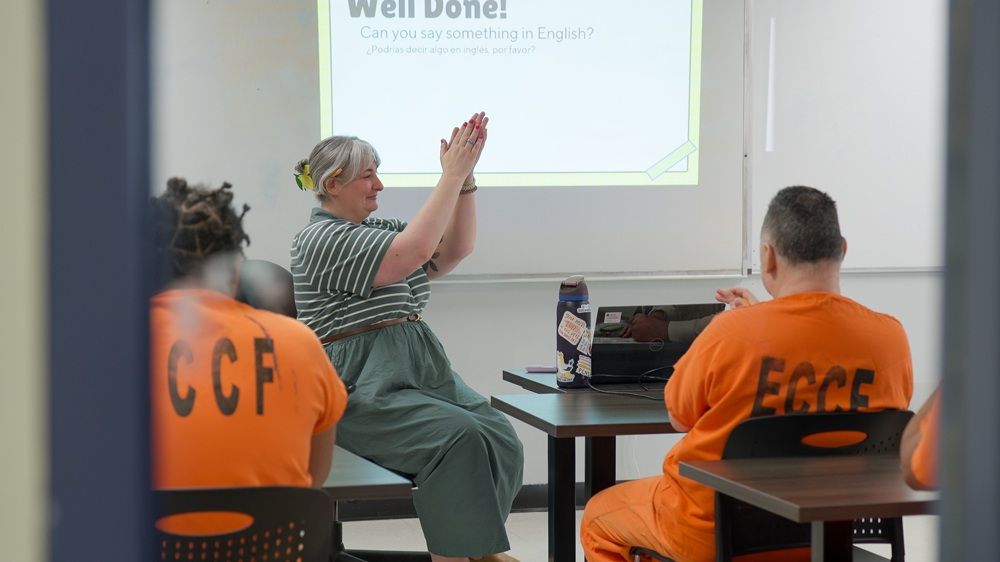
From there, the work moved into assessments: DiSC, StrengthsFinder, Myers-Briggs, most of which the people in her programs had never encountered in their lives. The point was never the score. It was the conversation the score opened up.
She might tell a man he is a high D, someone who needs to get his point across, and then ask him when in his life that had ever caused him a problem. Sometimes the answer was the gang. Once it was a father who beat him badly enough that he learned to fight back.
"I have yet to come across someone who didn't say, 'Wow, no one's ever asked me that, and it really made me think,'" she said.
Somewhere in that conversation, she would ask a question she had added over the years and never stopped using. If you could change anything or everything about the moment you committed the crime that landed you here, what would you do differently? Then she would turn it outward. What can you do while you are in this facility to demonstrate you have changed, so that I can tell administration to start watching for it?
What none of that captures is how long it can take for any of it to land.
The hardest student Shetler ever had spent months sitting in the back row with his arms folded, glaring at her.
"I thought, man, this is a man who's so hurt," she said. "He doesn't want to open up. He's afraid if he opens up, he will open up completely."
Years later, once he had, she asked him about it.
"I could tell when you talked about leadership, I wanted it so badly," he told her. "But if I let go, I would let go the whole way."
What finally moved him was not a module or an assessment. She asked him to be her assistant teacher. He walked away without answering, because he wanted it and was afraid of wanting it. Then he came back and said yes, and went on to teach finance, leadership, and a class on boundaries alongside her in the maximum security unit.
That is also where her one hard condition for administrators comes from. She will work with anyone, including people serving life, but not without something for them to do with what they learn.
"Do not give me people with life sentences unless you have something they can do in the prison to make a difference," she said. "People need to have a purpose and a hope."
Just One
Preparation only carries a person as far as the first employer willing to look at the application. That is where Shetler ended up spending a large share of her energy, and the objection almost never changed.
It was liability, and the insurance that comes with it.
Over time, she learned how to answer it.
"Tell me about the liability," she would say, "because you've got 200 employees and obviously out of the 200 there's at least one who isn't a felon that could be a liability. What do you do about that when you don't even know about it?"
Then she would share a story about a man at a manufacturing company where she once worked. Twenty years on the job. No record. Widely considered one of the best employees in the building.
He was selling company parts to competitors and moving them out on the subway.
The research gives her partial support. A 2018 study in the IZA Journal of Labor Policy, built on more than 10,000 call center hires, found that employees with criminal records stayed longer and quit less often than those without. It also found the picture was not uniform: in sales jobs, workers with records were about a third more likely to be discharged for misconduct, while in customer service jobs they were not.
What Shetler hears from companies is rarely evidence at all.
"For years, I have seen companies give so many reasons for why they can't hire a returning citizen," she said. "But most of the reasons they give are myths and hearsay. If they would just consider hiring one person, they would be surprised at the intelligent, hard-working person they would have in their workforce."
Today, she builds short training modules under the name Unlocking Possibility, designed so a manager can spend 15 minutes preparing a team before a justice-involved hire starts. Her pitch is deliberately small, because small is what gets a yes.
Hire just one.
Robinson makes the same pitch now, and Shetler is the first to say it lands differently coming from him.
"They have way more credibility as someone who's been incarcerated and made it," she said.
The Inside, Translated
ROCK Solid Coaching & Consulting is the company Robinson and Mike started after Creed told them they could. The name is an acronym, and those four words are the entire method: Relationships, Organization, Communication, Kindness.
Neither man learned those four words in a business school. They built it out of a decade of watching who made it out and who came back.
Ask Robinson what a person actually needs to survive the first year home, and he does not start with a job.
"You've got your big three: transportation, housing, and employment," he said. "And that's great, but all of that kind of gets muddled up if you don't have the support system underneath you."
Housing, transportation, and employment are what a release plan gets graded on. The support system is what holds all three up, and it is the one thing a release plan has no line for.
Part of what makes that support hard to build is what a person is already carrying when he or she walks out.
"It's hard to not feel like, ‘Oh, you got thrown away,’" he said. "Society went, ‘Oh, we don't like you, get out.’"
A framework will not undo that by itself. But it gives a man a place to stand while he figures out how to be somebody's neighbor again, and it gives the people around him something concrete to do besides hope.
Rehabilitation Works
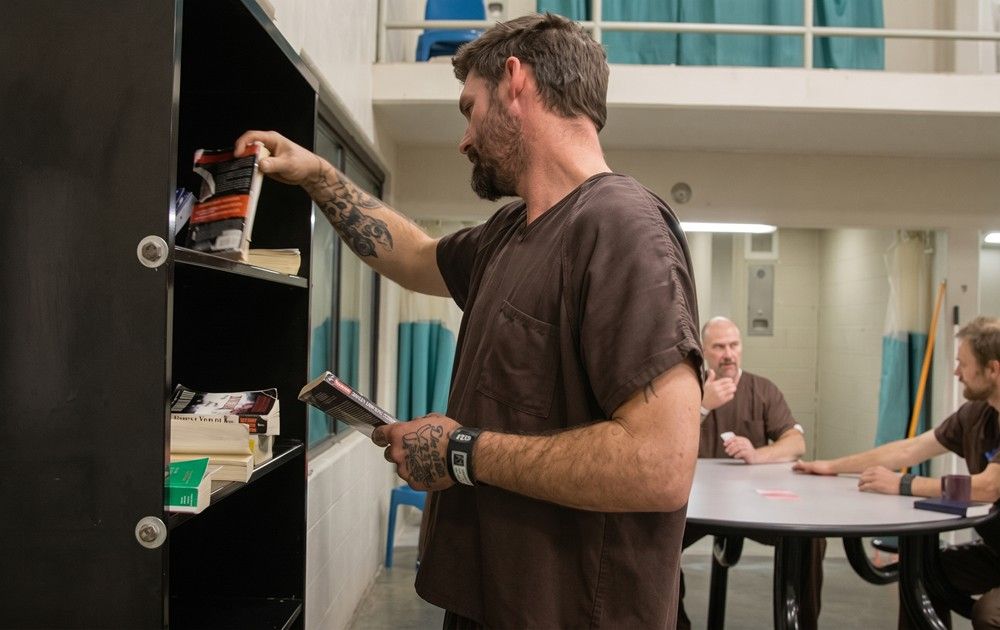
Everything Robinson and Shetler describe rests on one claim: that people leave in better shape when somebody prepares them to. It is a hard claim to prove, mostly because almost nobody measures it. Programs like Shetler's run on grants, serve small groups, and end when the money does. The people who finish scatter into a hundred different towns, and no one follows up.
So Shetler followed up herself.
She got special permission to do something almost nobody in corrections gets to do, which was to meet people at the gate on release day and track what happened to them afterward.
"I was following this group to retrieve data about their reentry experiences," she said. "So my goal was to be there the first minute, the first day, the first week and the first month of their release."
She has worked with more than 200 people in their final year of incarceration. She followed ninety of them for five years after release.
Not one of them was ever fired from a job, she said.
A small number went back, on violations rather than new crimes. She is careful about what that proves, because 90 people is a small group and she chose the program they went through. But it is also the only long-term record of its kind she has ever seen anyone keep.
The broader research points in the same direction. A 2013 RAND Corporation meta-analysis found that people who participate in correctional education have 43% lower odds of returning to prison. An updated meta-analysis by the same team, published in 2018, put the figure at 28%.
What no study has managed to capture is the moment the work actually takes hold. But Robinson can name his: a stack of books and a stamp, years before anyone offered him a program. The man in Shetler's back row can name his: the day she asked him to come to the front and teach.

Why Change Comes Slowly
If the case is this strong, why isn't every facility doing this? Shetler's answer, after decades of asking, is that the people running the buildings are usually not the obstacle.
"I can't think of a single warden who didn't say to me, 'You're absolutely right. It's just we don't have anybody who will come in here and do that,'" she said.
The obstacles sit somewhere else.
The constraints that wardens name are real ones. Programming takes space a facility may not have, escorts a short shift cannot always spare, and staff to run count around it. A volunteer who clears background and starts strong can stop showing up by spring. And every administrator has watched someone complete every program on offer and come back anyway.
None of these constraints are an argument against trying. They are arguments for building something that survives a short-staffed Tuesday.
Most of this work depends on outside money and outside people. Shetler's programming ran on a Department of Justice grant, and when that kind of funding ends, the program usually ends with it. A facility that wants this has to find somebody willing to walk in the door and build it, and then find a way to pay for them.
Underneath that sits something a budget cannot fix, Robinson said.
"We're very punitive in America," he said. "And I think it has to do with our instant gratification. Like you screwed up, you're going to do the time, and then I don't have to worry about you ever again. But that's not true. You do have to worry."
Reentry, as Robinson describes it, is scattered across everyone and owned by no one. The facility holds a piece. A reentry program holds another. So do employers, mentors, families, and parole. A person walking out has to be talented enough, and lucky enough, to assemble the picture on his or her own.
"If you're talented enough to get all those puzzle pieces to go together and get a picture, then that's great," he said. "But that's not exactly how it's been."
Shetler's ask is smaller and more immediate.
"Let's do something with a small group at a time," she said. "Let's prepare these men to be so successful when they get out that people go, 'Oh my gosh.'"
Where to Start
Ask either Robinson or Shetler what they would tell someone walking out next month, and the advice is not what most people expect.
Shetler starts by telling them to slow down. Her rule is roughly a week of doing nothing for every year served. Ten years inside, ten weeks of walking outside, eating in restaurants, sitting with people, before worrying about a job, if they can afford to.
The instinct is to sprint. She has watched what happens when people do, and she would rather they breathe first.
Robinson's advice runs the other direction, and it is aimed at the people who have not walked out yet. Start now. You do not have to wait for a program to be offered to you. Own what you did, and own your reentry with it. Communicate with your parole officer, because the only thing a good one wants is to not be caught off guard. Build the support system before you need it, because everything else rests on it.
And understand where the help stops, and where you begin.
"I can't want it more than you want it," he said.
Robinson is careful about optimism, but he thinks something is finally moving. For most of his sentence, he heard the same thing from every direction: from other incarcerated people, from officers, from unit teams, from volunteers, and now from the reentry world outside. Most agree the system is not doing what it was built to do. What has changed is that people are starting to ask the next question.
"I think the ice is breaking," Robinson said. "We've got to start handling rehabilitation differently, and I think we're on the right path now. I say that with a little trepidation, because I know there's going to be hiccups in that push. But we'll get there. I'm confident."
For the people who run the buildings, both of them keep the ask deliberately small. Shetler’s is a single cohort: pick 10 people in their last year, give them something structured, and follow what happens to them after the gate.
Robinson’s is earlier than most facilities are comfortable with: stop treating reentry as the last 90 days of a sentence and start asking the question at intake. Neither one starts with a new building or a new department. Both start with someone deciding that preparation is part of the job.
The People Who Show Up
For everything both of them have built, Robinson's own story keeps pointing at something no curriculum covers.
He lost his mother while he was serving his sentence, and he could not be there for her final moments. A member of his unit team handled that morning with considerably more care than the job required. She came and got him early, made sure his cellmate knew he would be needed, stayed with him through the call home, and afterward told him he could sit in her office as long as he wanted. Before he left, she asked him to tell her something funny about his mom.
"Oh, sit back," he told her. "I've got stories."
Ten years later, he walked into a convenience store in a neighboring town and found himself staring at the woman behind the counter, unable to place her. She looked back at him and asked why he looked so familiar. It came to him about half a second before it came to her, and he asked whether she had ever worked at Lansing Correctional Facility.
She came around the counter. They both cried.
She wanted to know everything, so he told her: a house, three dogs, a 19-year-old son, a handful of businesses he had founded, and a life he cheerfully describes as absolute chaos that he loves every minute of.
"I knew you were going to be just fine when you got out here," she said. "You are my biggest success story."
She never ran a program. She had no grant, no curriculum, and no assessment tools. She had an office, a phone, and a decision about how to treat a man on the worst morning of his life.
He stops in to see her every Saturday.
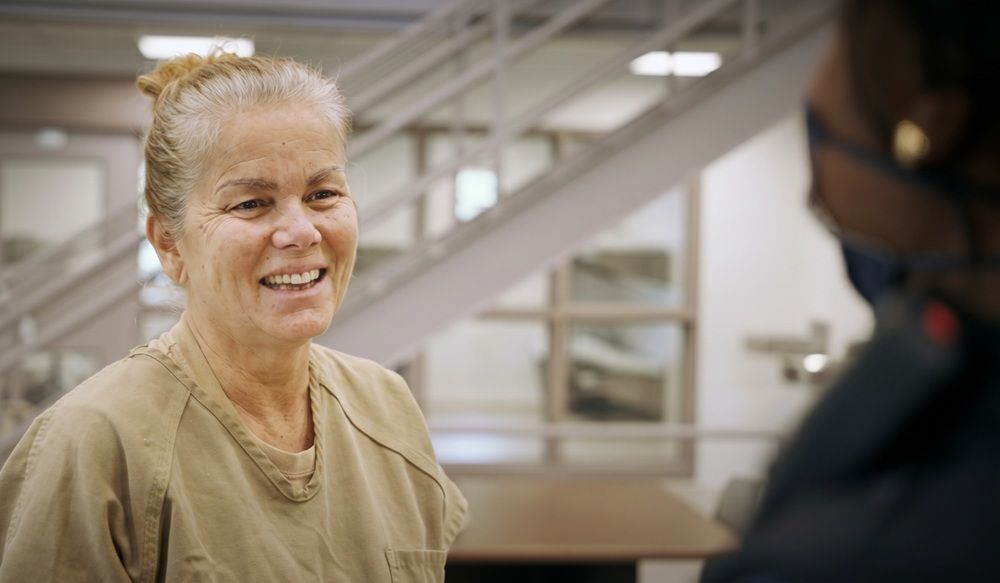
Every person in this story was changed by somebody who decided to show up. A coach who answered a letter. A staff member who stayed in the room during a man's life grief. A teacher who asked the man in the back row to come to the front.
A budget buys the structure: the program, the assessment, the coach who keeps coming back. What it cannot buy is someone deciding that the person in front of them was going home one day, and that it mattered what shape he or she was in upon arrival.
A facility needs both. Only one of them can start tomorrow.
Those people are already inside every facility in the country. So are the ones waiting on them.
You may also like these
Related Posts
How Safe Is Your Facial Recognition Data?

Building Westville State Prison: Designed to Rehabilitate