Security Rounds You Can Prove
In corrections, a round you cannot prove is a round you did not perform.
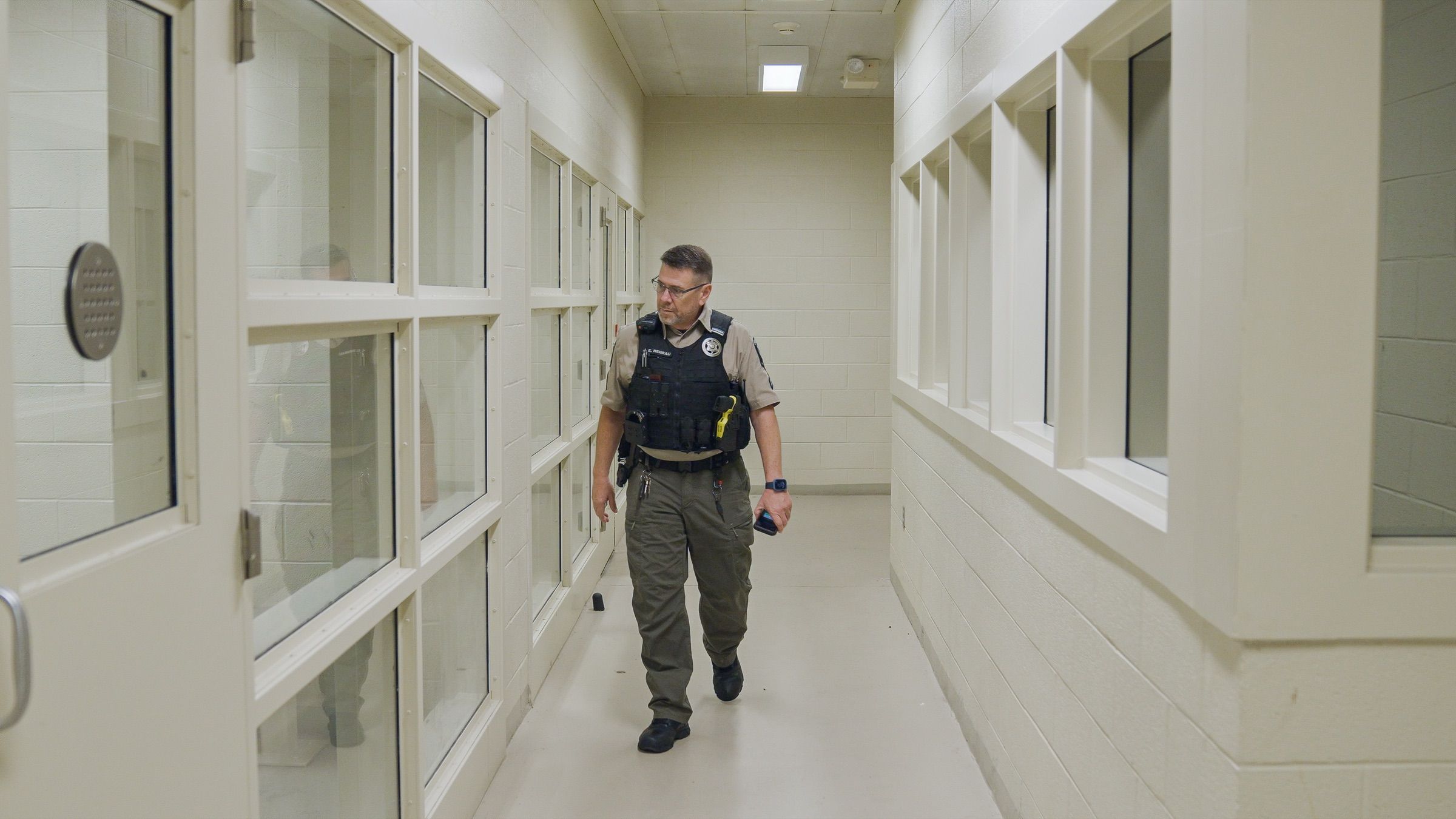
Your officers move through every housing unit, every shift. They confirm each person is accounted for and in the condition they should be in. The question an auditor asks two years later is not whether the round happened. It is whether you can show it.

Paper says the round happened. It does not prove it.
Handwriting blurs. Entries get written from memory at the end of a shift. Anything that can be written later can be challenged later. The check itself should carry its own time and location.

Your officers know when the next check is due. Do you?
A supervisor reading yesterday’s logs is doing forensics, not supervision. By then, the round is already late. The warning has to reach the floor before the miss, not the office after it.

You know your round pattern. So does your housing unit.
Nobody posts a schedule. The unit infers one by watching. Rounds that land on the hour teach everyone inside exactly how long they have. Timing can vary without breaking your compliance window.
Enter Command Cloud, the officer experience platform from GUARDIAN RFID. Mobile tracking, real-time compliance monitoring, and AI-assisted staggered checks ensure your rounds are spotless yet unpredictable.
99.9%
Jail standards compliance, Smith County, TX.
95%+
Out-of-cell compliance (Arizona Department of Corrections, Rehabilitation and Reentry, Browning Unit)
30 days
Doubled compliance rate, Adams County, Ind.
Two years without a missed round
"With GUARDIAN RFID, we’ve been auditing 100% of our security rounds and we haven’t missed a single security round in over two years, that we’ve had to discipline somebody for."
Joshua Combs, Lieutenant
Benton County (WA) Sheriff Department
See Security Rounds in Action
Book a demo customized for your facility.

The Most Dangerous Round Is a Predictable One
A round on the same minute every hour is one the unit can plan around. If checks fall on :00 and :30, everyone inside knows they have 29 minutes.
State standards agree. Most require staggered checks, not fixed times. Unpredictable rounds catch behavior as it happens. Staggering costs you nothing on compliance. A standard sets a maximum interval, not a minute. A check at :07 and another at :34 satisfy a 30-minute requirement as well.
Four Things Make a Round Defensible. Here Is What Closes Each One.
Every state sets a check interval, and classification tightens it. Either way, an officer observes and the facility has to prove it.
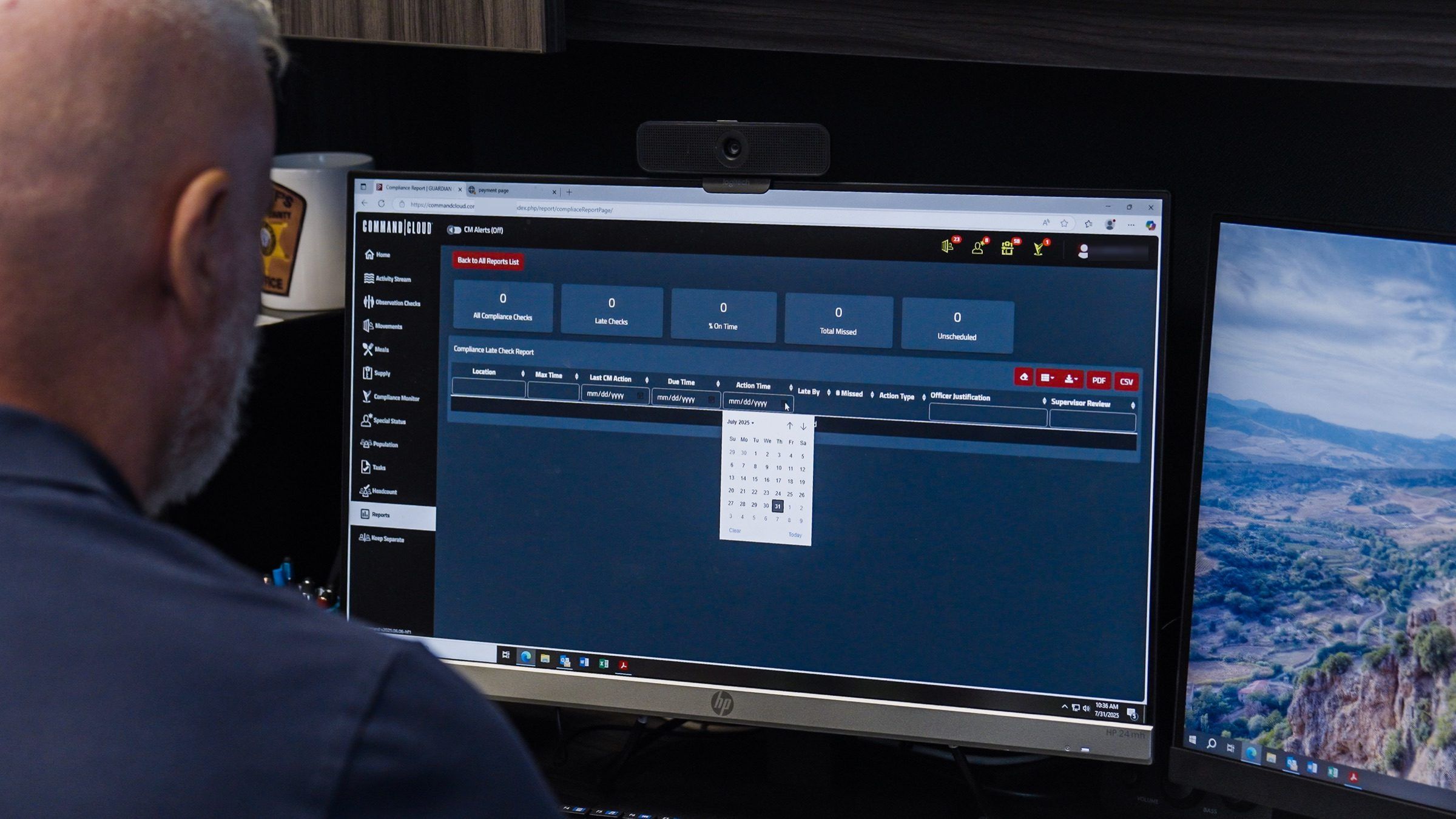
1) Proof of presence: Hard Tags mount at the cell door, no wiring, no batteries. A scan captures its own time and location.
2) Tamper-proof: Nothing to type in, nothing to revise. The record is what the scan captured, not what got written down later.
3) Observation detail: Mobile Command XR on SPARTAN captures voice-to-text, WordBlocks, images, and video on the spot.
4) Retrieval: Mission Command holds the reporting. Operational Intelligence surfaces patterns across shifts and units.
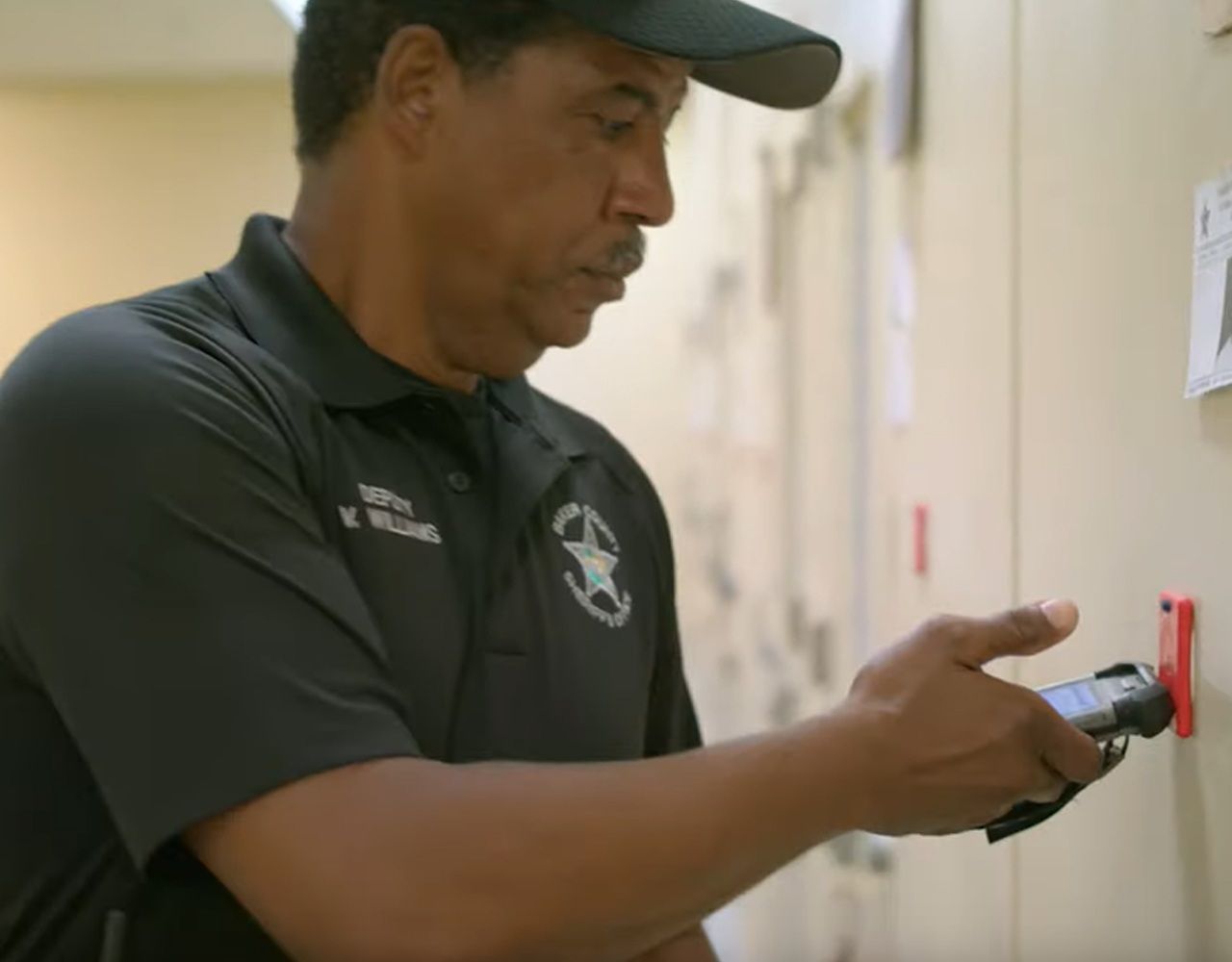
Then the accountability loop. A late check needs a reason, and a supervisor rules on it. ACA and PREA expect the same. Mobile Compliance Monitor adds countdown timers ahead of the miss, staggered rounds with a Staggering Score, and check frequency that adjusts automatically with classification.
But What About the Way We're Doing Rounds Now?
Guard tour systems, pen and paper, and an officer experience platform are three ways to solve the same problem. But the old way of doing things comes with limitations.
| Method | Proof of presence | What the officer can document | Works offline | Audit retrieval |
|---|---|---|---|---|
|
Pen and paper |
Officer’s handwriting |
Anything, if legible and written in time |
Yes |
Manual search of logbooks |
|
Guard tour system |
Checkpoint scan |
That the checkpoint was reached |
Varies by device |
Manual export |
|
Officer experience platform |
RFID tag scan with time and location |
Activity, demeanor, notable signs, photo, video |
Yes, syncs on reconnect |
Filtered report |
How Rounds Data Makes Its Way to Your JMS
An important distinction: Command Cloud is not a jail management system.
It doesn't replace one, either. A jail management system is the system of record. Command Cloud is the system of execution, and it integrates with the major platforms.
Command Cloud supports both one-way and two-way integrations with most major JMS providers. One-way is simpler to stand up. Two-way removes double entry.
What It Costs to Modernize Your Security Rounds
Answer a few questions, and we'll give you a range of what Command Cloud could look like at your facility.
Frequently Asked Questions
It depends on your state jail standards and on each person’s classification, not on facility preference. General population is commonly checked every 30 or 60 minutes. High-risk and suicide watch are commonly every 15. Minnesota Rules, Part 2911.5000, for example, requires that all inmates are personally observed by a custody staff person at least once every 30 minutes. When a classification changes, the check frequency has to change with it. A frequency that lags the classification is the most common documentation gap in corrections.
Yes, and staggering is the stronger practice. State standards set a maximum interval, not a fixed clock time. A facility required to check every 30 minutes stays compliant whether the round begins at :02 or :19. Some standards go further and call for it directly: Minnesota Rules, Part 2911.5000 states that "thirty-minute checks should be staggered." Rounding on the increment is what creates a predictable gap the housing unit can plan around. Varying the start time inside the allowed window satisfies the standard and removes the pattern. Compliance and unpredictability are not in tension.
Yes. Mobile Command XR stores checks locally on the device and syncs to Command Cloud automatically when connectivity returns. This question comes up on nearly every technical review because concrete and steel construction creates dead zones in almost every facility. Nothing is lost during an outage and nothing has to be re-entered afterward. Officers keep documenting at the point of responsibility whether or not the network is reachable at that moment.
Command Cloud prompts rather than simply recording the miss. A Hard Tag scanned after its due time triggers a late check justification on the device, entered by typing or voice-to-text, and it cannot be edited after submission. A supervisor reviews the justification and approves or declines it with a note. What that produces matters more than the individual entry: a pattern a supervisor can act on, and an audit trail that shows the facility caught the problem.
Yes. Command Cloud schedules assign intervals by area, tag, unit, shift, or role, and they can be adjusted during a lockdown, heightened observation, or reduced staffing. Segregation and general population do not have to run on the same clock. Special compliance statuses override the area default and follow the person rather than the cell, so moving someone to a different housing area carries their check frequency with them automatically.
They hold up because they cannot be edited after the fact. Each check carries time, location, officer identity, and action, with photo and video attached to the record where an officer captured them. Corrections lawsuits typically arrive five to seven years after the incident, when nobody remembers the shift and paper logs are in storage. A filterable, immutable record is what makes the difference at that point. Documentation is not a legal guarantee, but its absence is reliably a problem.