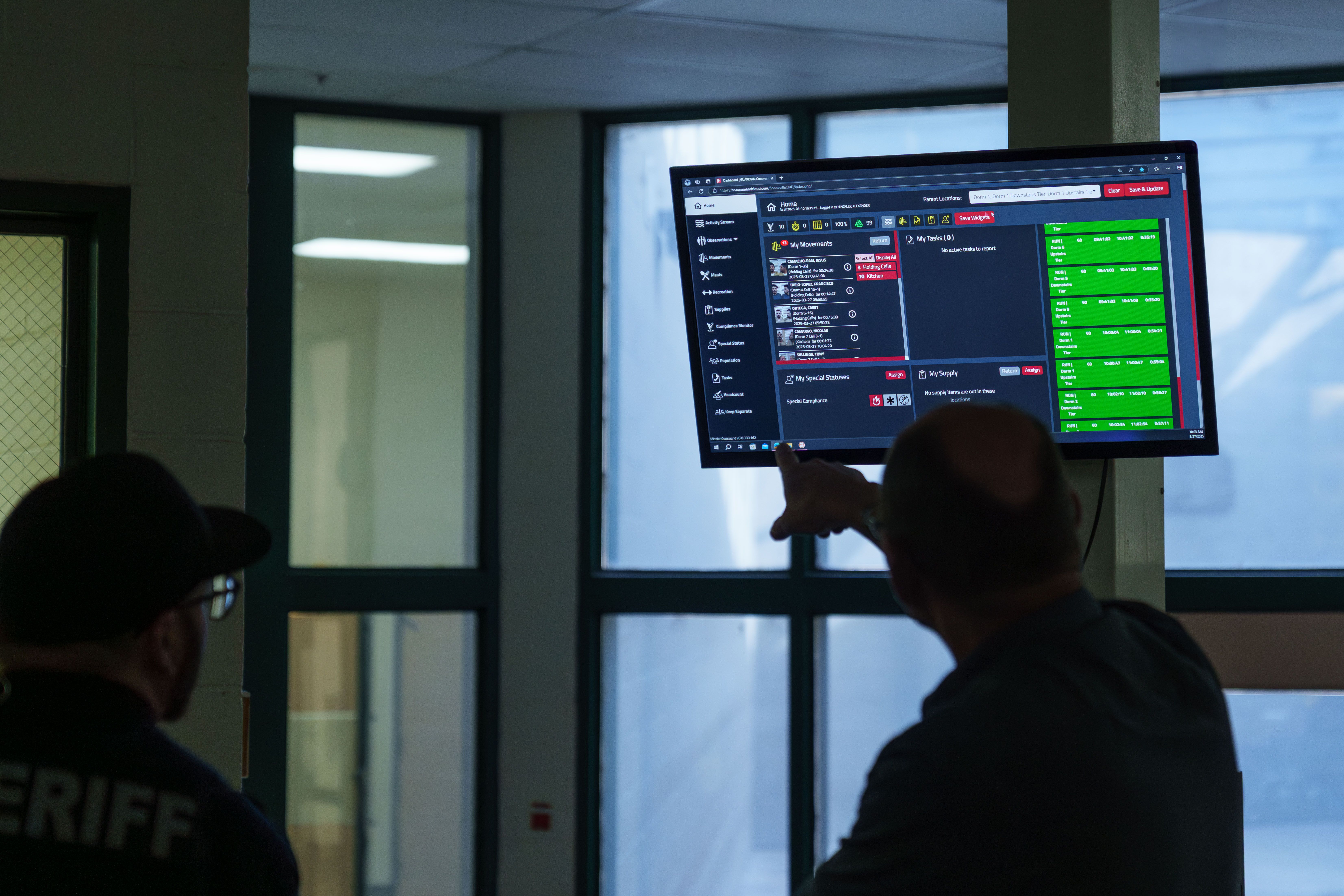
Reporting with Ironclad Defensibility
Every round. Every check. Every record. Pre-built reports and Operational Intelligence from GUARDIAN RFID.

Every report request comes with a deadline
The sheriff wants it this afternoon. The auditor wants it before they leave. Waiting on a report is the part nobody budgets for, and it always lands on the person who can least afford the time. It should already exist.

You should not learn about a late check weeks later
A pattern of late rounds is a scheduling problem this week and a liability by next month. What decides which one you are dealing with is how quickly anyone can see it. Paper decides that for you.

Paper can be pencil whipped
A written time is only as good as the person holding the pen. Four minutes late becomes on time, and nothing in the record says otherwise. A scan carries its own timestamp. That cannot be moved.
Prove everything your officers did on the floor, without building a thing. See where performance slips while you can still fix it.

Easy ACA process indicators
"There are multiple, multiple standards that ACA requires that we prove we do certain tasks. GUARDIAN [RFID] tracks these activities and we’re able, with a few clicks of a mouse, to pull reports that we can put right into our process indicators for ACA."
Adam Clarke, Captain
DeSoto County (MS) Sheriff's Office

'The auditors had it at their fingertips'
"With the GUARDIAN RFID system, the auditors had the information they needed at their fingertips. They were able to complete the audit and they were able to complete it quicker than they have in years past."
Ryan Ross
Charles County (MD) Sheriff's Office

'A true representation of what our staff did'
"We know that it can’t be altered or edited in any way and it is a true representation of what our staff did during an inmate’s time here."
Dan Schleusener, Chief Deputy
Buffalo County (NE) Sheriff's Office

Revolutionizing jail management
"[Operational Intelligence] in itself has completely revolutionized the way that we manage jails. Anybody who’s not using OI is immediately at a disadvantage in 21st-century corrections."
Alexander Gray, Capt.
Rockwall County (TX) Sheriff's Office
See Your Reports in Action
Your own workflow, and the reports you would actually run.
In corrections, reporting matters more than ever.
The record is the only thing that speaks for your officers after the fact. The questions or lawsuits never arrive while the shift is fresh. They arrive months or years later, and they arrive as absolutes.
Was the check done? Was it on time? Who did it? Was anything observed? A record either answers those four questions or it does not, and by then, there is no partial credit.
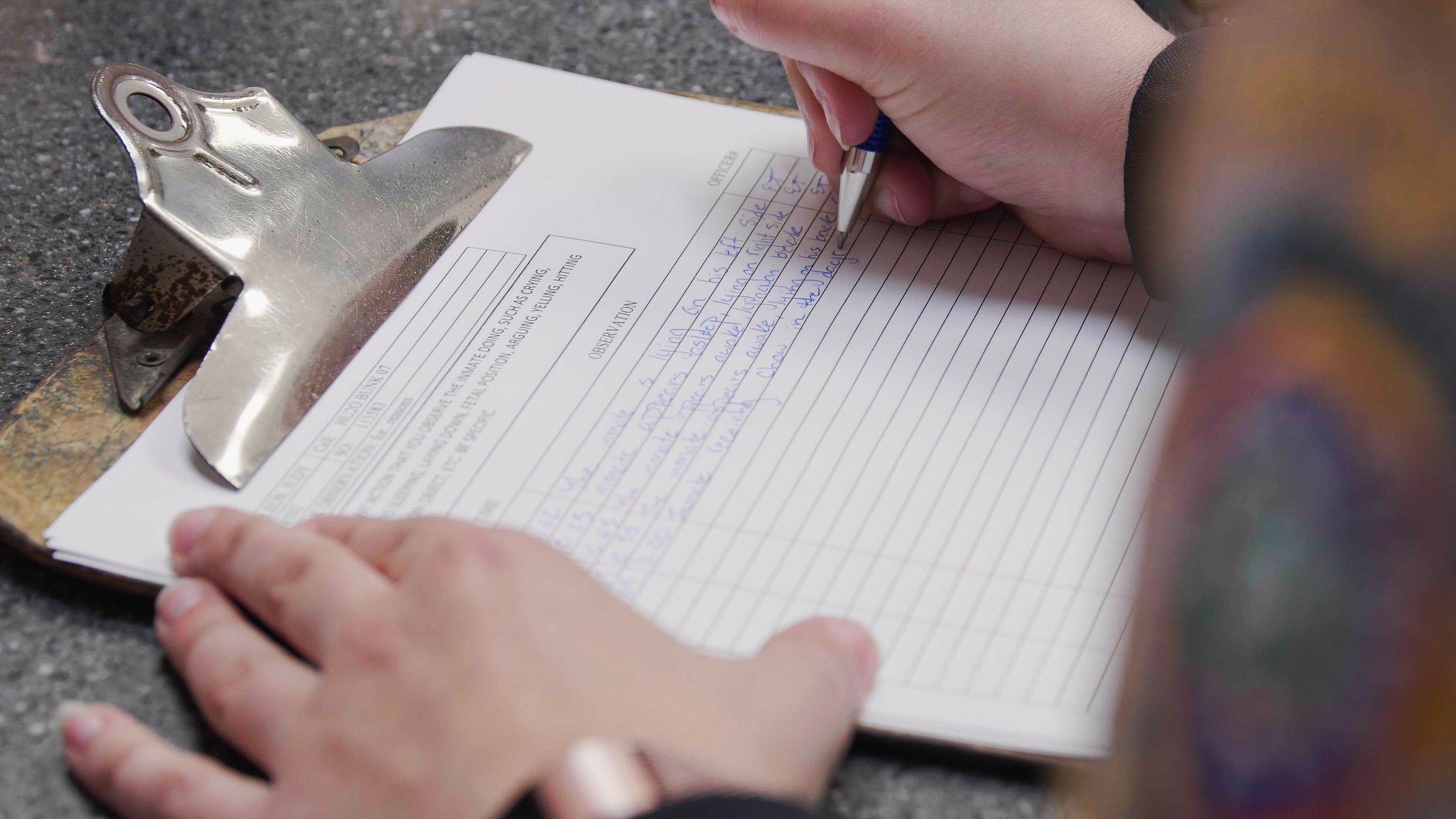
What Paper Reporting Is Actually Costing You
1) You're trusting a record that can be rewritten
2) You lose an officer off the floor
3) You lack real-time visibility
Pre-built reports in Command Cloud from GUARDIAN RFID answer all three.
Paper Logs vs. Command Cloud
| Operational question | On paper | In Command Cloud |
|---|---|---|
|
Can the recorded time be changed afterward? |
Yes. Handwritten, no independent timestamp. |
No. Each scan carries its own timestamp. |
|
Can you tell who documented it? |
The initials, if they are legible. |
The officer, by credential, on every entry. |
|
How long until a late round is visible? |
Weeks. After someone reads the log. |
The same shift. |
|
What does retrieving one record cost? |
Minutes to hours, and an officer off the floor. |
Seconds, from anywhere. |
|
How does a record leave the building? |
Photocopy or scan. |
PDF or CSV export. |
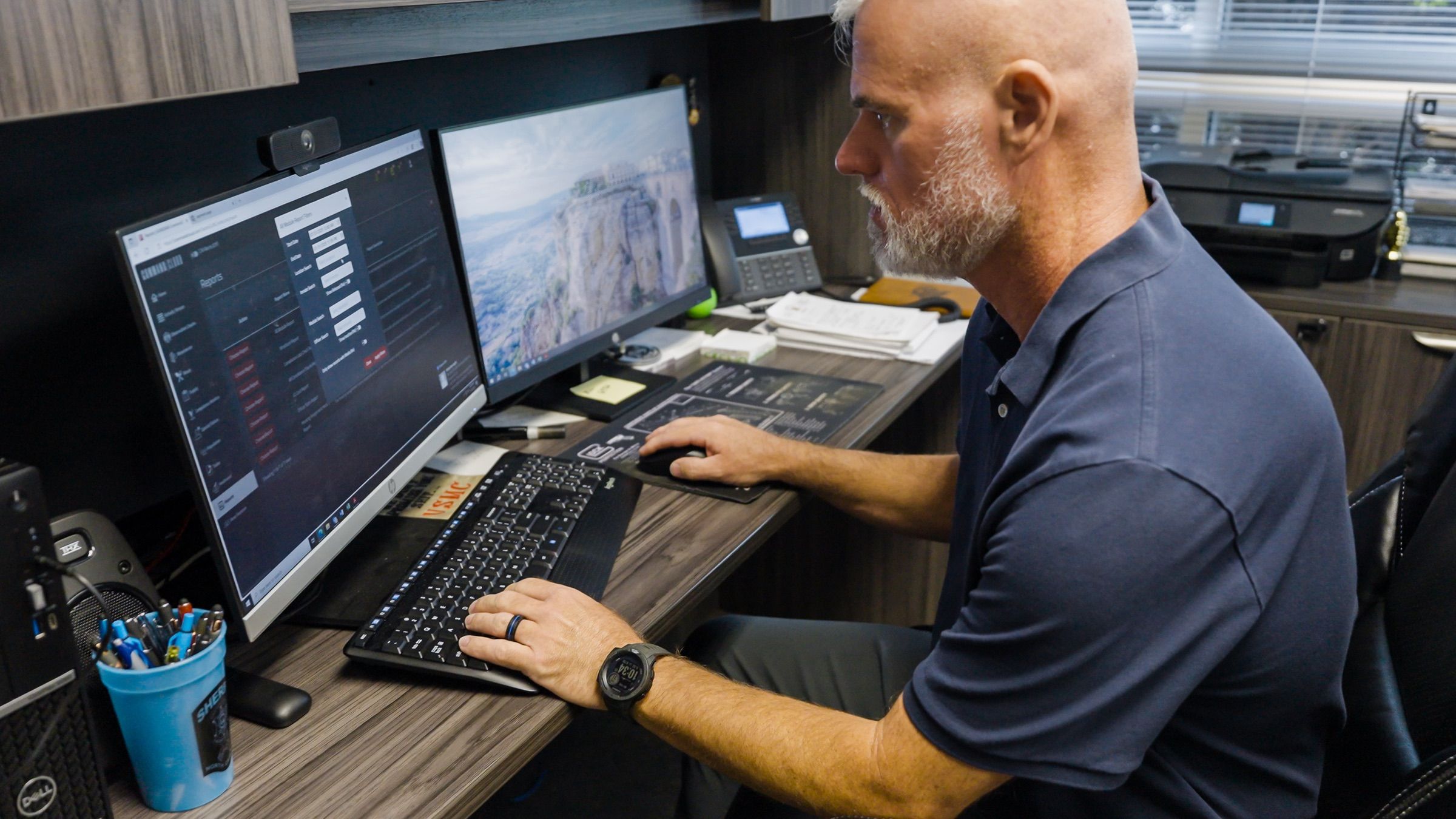
Pre-built Reports in Command Cloud
All Module. Wristband. Compliance Late Check. All Compliance Checks. ID Card. Officer Stats. Housing Assignment History. Medication Order History. Medication Inventory History. Medication Administration Record. Time Type Tracking. Recreation History.
All prebuilt and waiting for you at your workstation. Filter, share, or export to CSV or PDF. Schedule them to land in your inbox, or your sheriff's. Goodbye, printing and scanning.
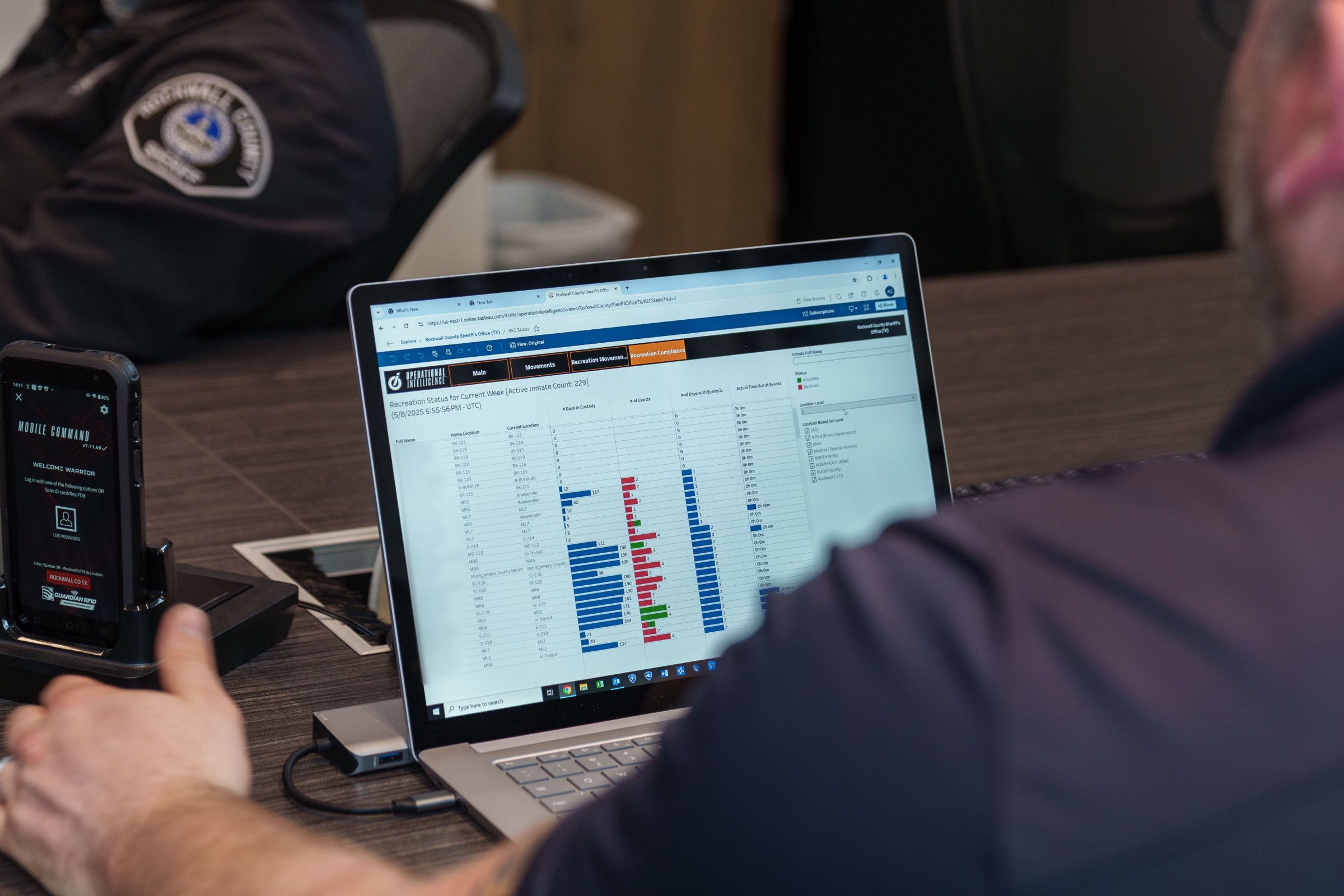
Turning Data into Decisions
A report tells you what happened. Operational Intelligence for Command Cloud tells you what it means.
Your team's scans log the floor, one entry at a time. Operational Intelligence steps back and shows the shape underneath: Rounds Compliance, Late Checks, Observations, Meals, Special Status, Movements, Supplies. Nine views of the same data, each one answering a different question at a glance.
The real value shows up in the pattern, not the entry. One late check is a moment. The same officer, same shift, same hour, week after week, is a trend. A list hides that. A dashboard doesn't.
What Does Next-Level Reporting Cost?
Command Cloud's prebuilt reports are baked in. Operational Intelligence comes with an incremental fee, based on your facility's average daily population. Answer a few questions and get a full price estimate.
Frequently Asked Questions
It is proof of what officers actually did on the floor. Rounds, cell checks, headcounts, meals, medication, and inmate movement, each event time-stamped and attributed to the officer who performed it. The distinction that matters is between a schedule and a record. A post order says a check should happen every 30 minutes. Compliance reporting is what proves it did, in a form a state inspector, an accreditation reviewer, or a plaintiff's attorney can read years later.
All of these, and none of them require setup. All Module, Wristband, Compliance Late Check, All Compliance Checks, ID Card, Officer Stats, Housing Assignment History, Medication Order History, Medication Inventory History, Medication Administration Record, Time Type Tracking, and Recreation History. Each one already exists in Mission Command. Your staff set the filters and run it. The Compliance Late Check report is the one most jail administrators open first, because it consolidates who runs late, where, when, and why into a single view.
Yes. Every prebuilt report filters by officer, location, date range, and activity type. You can narrow one report to a single housing unit on a single shift, or open it wide across a month to look for a pattern. Filtering is what lets one report answer several questions. A supervisor checking last night and an accreditation manager assembling a year of documentation are running the same report with different filters.
PDF and CSV. Printing and scanning is not part of the workflow. The old sequence, find a printer, load the paper, pick a format, clean the scanner glass, and line the page up straight, was never about the report. It was about getting the report into an email. Export removes that step. PDF goes to whoever needs to read it. CSV goes to whoever needs to work with the numbers.
It depends on which standard you are audited against, but the pattern is consistent. An auditor wants proof that a required task happened, that it happened on time, and that a named person did it. The prebuilt reports that carry most of that load are Compliance Late Check for rounds and welfare checks, All Compliance Checks for the full timer record, and Medication Administration Record for pill call. Accreditation reviewers can pull the output straight into their process indicators.
You can export what your jail management system holds, which is the administrative record. What it does not hold is floor activity. A jail management system knows an inmate was assigned to cell B-14. It does not always know that an officer stood at that door at 2:14 in the morning, observed the inmate breathing, and logged it. That is the record an audit asks for and a lawsuit tests. Exporting from a system of record cannot produce data it never captured.
Records are retained indefinitely, not on a rolling window, and they stay retrievable. That matters because corrections lawsuits rarely arrive in the first year. Agencies routinely face them five, six, or seven years after the fact, long after the officers involved have moved on. Defensibility rests on three properties. Every entry is time-stamped at the moment it happens. Every entry is attributed to a person. And no entry can be altered afterward to say something different.
One gives you the record. The other gives you the pattern. Mission Command's prebuilt reports are the documentary artifact: a specific set of events, filtered to what you asked for, exportable and defensible. You run one when someone needs proof. Operational Intelligence visualizes that same floor data instead of listing it, so trends surface without anyone reading down a column. You watch it when you are trying to catch something early. Same source data, two different jobs.
Documentation keeps working. Data collection does not require a WiFi connection. Records are stored locally on the device as officers capture them, and they sync to the cloud once the connection is restored. Nothing is lost and nothing has to be re-entered. That matters in the parts of a facility where coverage is thin, which is exactly where documentation still has to hold.