About Uinta County Sheriff’s Office
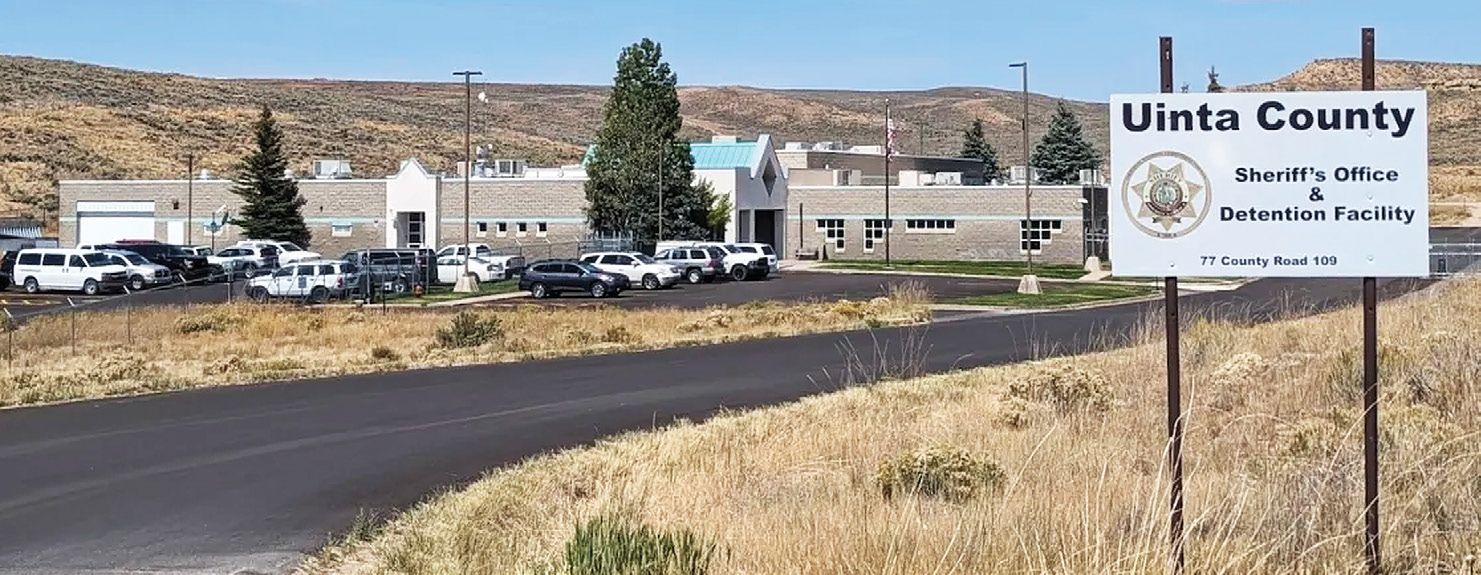
Located in the southwestern corner of Wyoming along the Utah border, Uinta County is a high-altitude region defined by the rugged peaks of its mountains, rolling sagebrush steppe, and expansive high plains. Established in 1869 by the Wyoming Territorial Legislature, the county takes its name from the Uinta Mountains, which rise to the south across the Utah line.
Today, the Uinta County Sheriff’s Office manages a correctional facility with an average daily population (ADP) of approximately 55 inmates. Committed to the values of professional excellence and public safety, the Sheriff’s Office continuously seeks innovative ways to improve operational accuracy and provide high-quality care to those in its custody while maintaining a secure environment for its officers and the surrounding community.
The Challenge
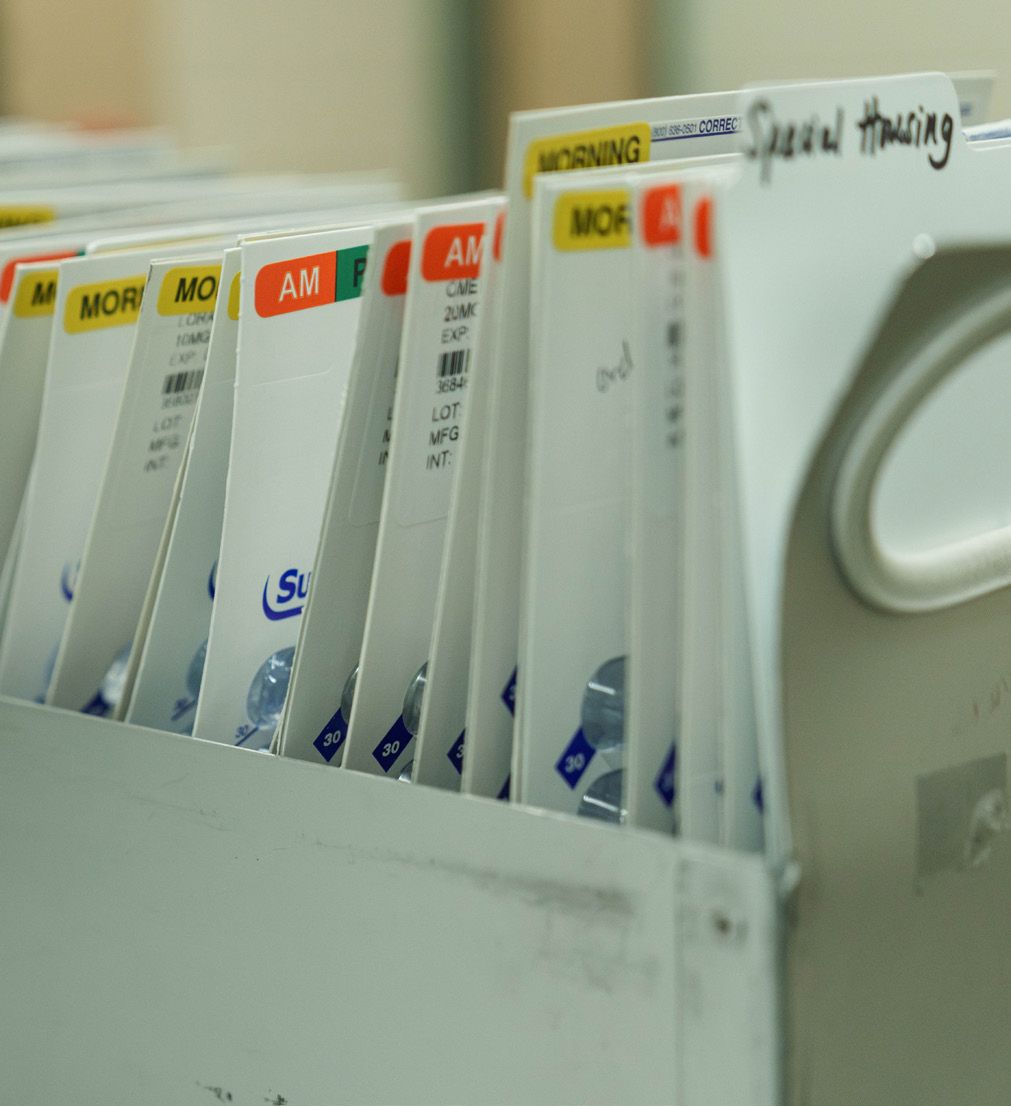
For years, the Uinta County Sheriff’s Office relied on a fragmented patchwork of tools to manage one of the most consequential responsibilities inside any jail: inmate medication administration. Medical records were logged on paper, scanned into electronic files, and stored in each inmate’s medical folder. Inventory was tracked in an Excel spreadsheet built by staff to fill a gap their jail management system couldn’t address.
The workflow was time-consuming, error-prone, and almost entirely manual. A single large med pass could consume 45 minutes to an hour of an officer’s shift. Multiply that across daily passes, and a significant share of staffing capacity was being absorbed by paperwork rather than direct inmate care.
Inventory tracking was even more difficult. The Excel sheet had no way to automatically decrease counts when deputies passed medications, so the responsibility of reconciling it fell on Uinta County’s medical deputy, Michael Pace.
“When deputies were passing medications, it wasn’t decreasing the amount in my sheet. So I would constantly have to go through and inventory my meds four or five times a week to make sure that my count was right in case we needed to reorder more.”
Over-the-counter (OTC) medications introduced a separate set of risks. Tylenol, ibuprofen, and similar OTC medications were also logged by hand, and when a deputy forgot to record a dose, the next deputy had no way of knowing. An inmate could request and receive an OTC dose before the required interval had passed, creating both a clinical risk and a documentation gap.
The facility recognized that the issue wasn’t a lack of staff effort; it was the tools. Officers were doing their best with paper, pens, and spreadsheets, but the workflow simply couldn’t keep up with the realities of daily corrections operations. Uinta County needed a system purpose-built for jails, one that would replace the patchwork with a single, defensible source of truth.
The Solution
Uinta County’s path to GUARDIAN RFID started with a neighboring county. Sergeant Adam Davis had seen Command Cloud, the officer experience platform (OXP), in action at Sweetwater County, Wyoming, and reached out to learn more. After an on-site demo for command staff, including Sheriff Andy Kopp, Undersheriff Trevor Rasmussen, Jail Administrator Lt. Brenden Morrow, Davis, and the agency’s IT lead, Uinta County recognized the value Command Cloud could bring to its operations and moved forward with implementation.
For Pace, the appeal of Command Cloud was immediate. Its structure aligned naturally with Uinta County’s existing workflows, he said. Furthermore, when the agency learned that a dedicated Medication Manager module was on the product roadmap, Pace’s team jumped at the chance to help shape its rollout for their facility.
“When we started first looking at GUARDIAN, we noticed that we liked the way everything flowed, and then they told us that they were looking at getting a Medication Manager,” Pace said. “That’s when I became part of the process of trying to figure out what we wanted and how we wanted it to roll.”
Like many agencies introducing new technology, Uinta County hit some initial resistance. A handful of staff members were skeptical that another system would actually make their lives easier. However, after a brief adjustment period, that resistance faded and was replaced by relief and routine.
“We did have a couple of people that were somewhat against it,” Pace said, “but since we’ve been utilizing it, it’s become a part of our everyday routine, and they’ve all come to use it quite well.”
Within a short window, Medication Manager went from a seemingly intimidating system to a default workflow used every day, on every pass, by every deputy assigned to medication administration.
Operational Transformation
The most visible change was the time saved. What used to be a 45-to-60-minute med pass became roughly a 20-minute process — an over 50% reduction that gave deputies meaningful capacity back across every shift.
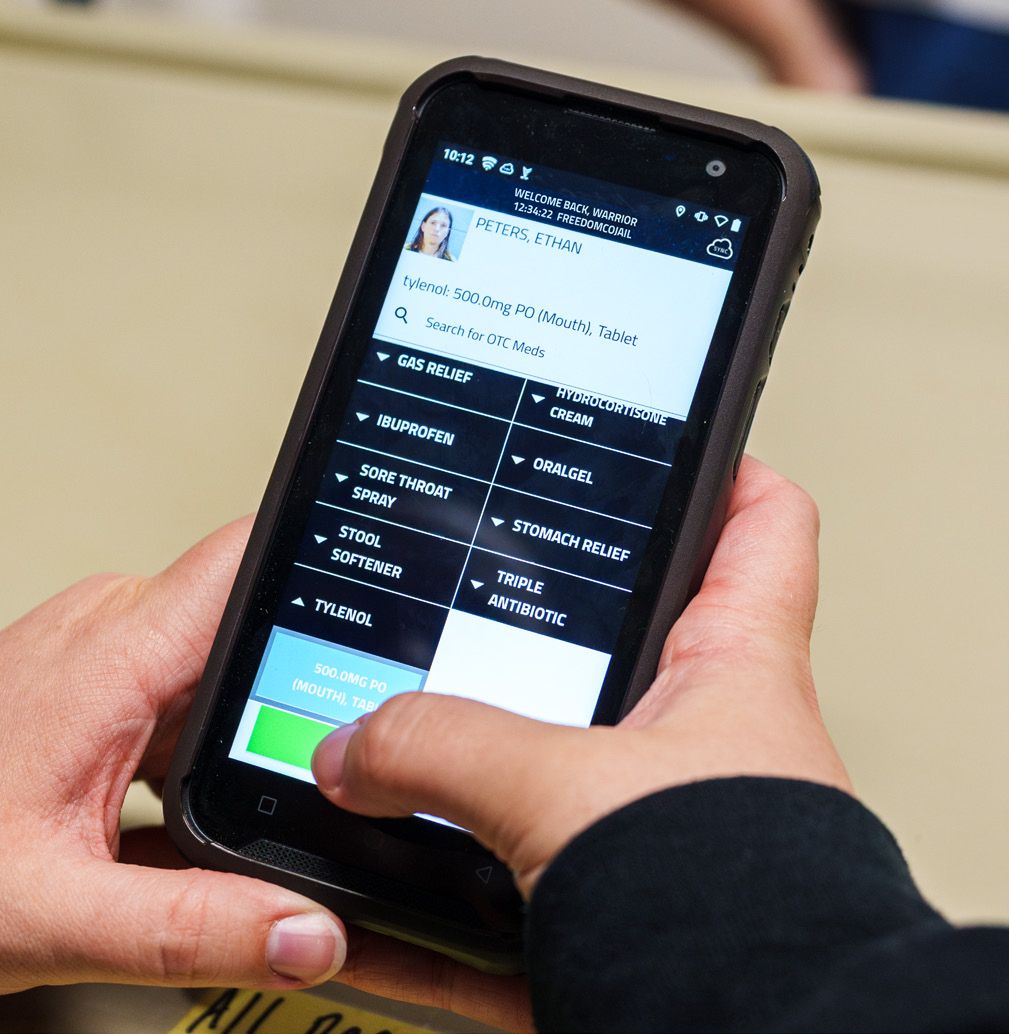
Documenting the pass no longer required a separate handwritten step, a scan into the electronic file, or a manual filing into each inmate’s medical record. Deputies captured everything at the point of responsibility on the SPARTAN (GUARDIAN RFID’s ultra-rugged mobile device) with each administration time-stamped, attributed to the officer who delivered it, and stored in Command Cloud.
Aside from recognizing the notable time savings, officers realized their biggest concern also disappeared: OTC double-dosing. Medication Manager’s built-in dosing rules flag any attempt to administer an OTC medication before its required interval has elapsed.
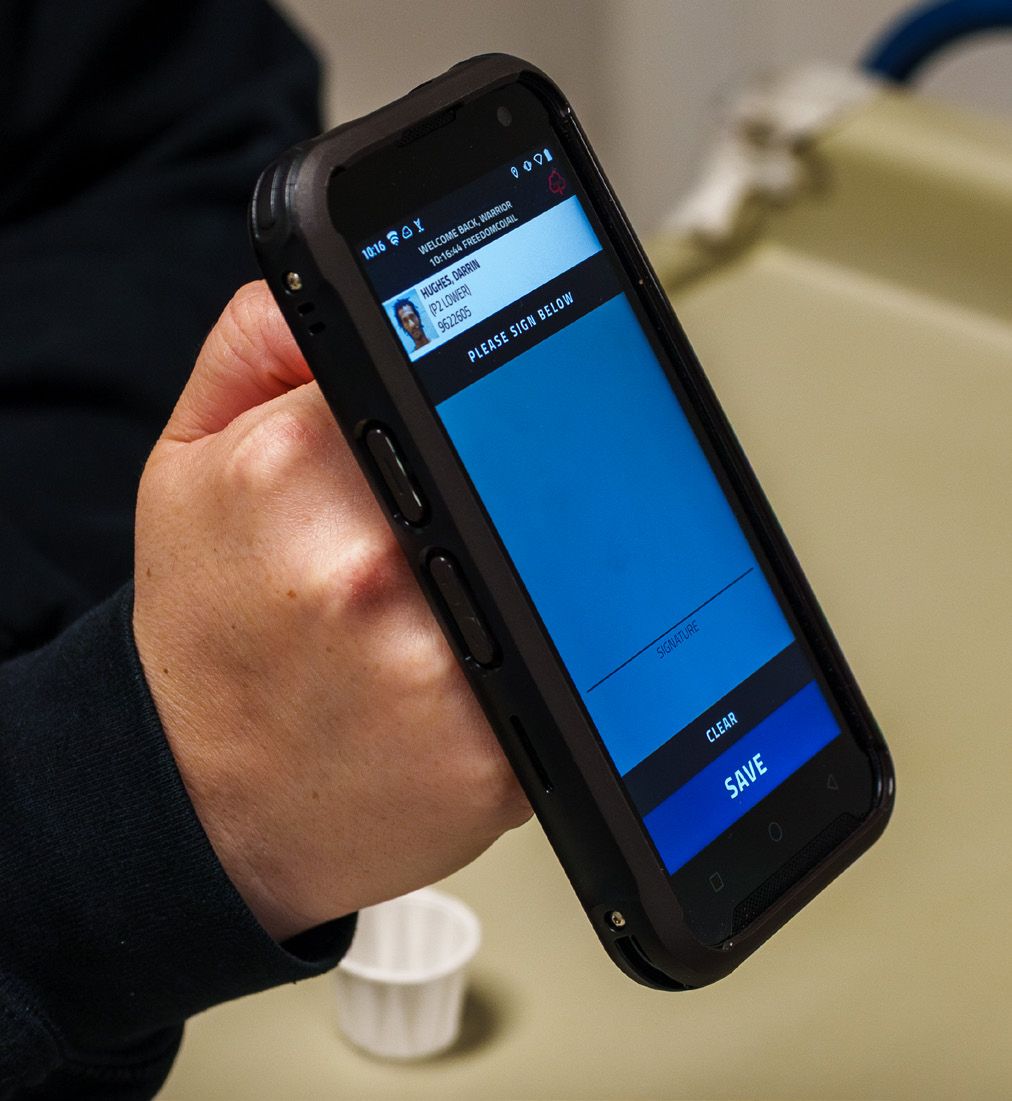
“Sometimes people would forget to write down that they took over-the-counter meds, so the inmate would be able to get Tylenol or ibuprofen before the time was due for their next dose. With the way this is set up, when you try to give them that dose before the six hours is up, it’ll actually highlight and tell you, ‘Nope, they can’t have it at this time’, which has been very beneficial.”
Inventory tracking — once Pace’s biggest source of friction — became another win. Because Medication Manager automatically decrements counts each time a medication is administered, the manual reconciliation that used to consume four or five sessions a week now happens just once.
“With the way that Command Cloud and the Medication Manager work, every time we put in there that they take their medication, it actually decreases on its own,” Pace said. “So I’ve got a lot more accuracy for what I’ve got for my inventory.”
Medication Manager’s Inventory History Report has become a daily reference point for Pace, giving him and his team a live view of stock levels, usage patterns, and reorder timing. Reporting more broadly has reshaped how Uinta County responds to external requests for medication records. Pulling a report that used to require digging through scanned paper files now takes seconds.
The Results
Stacked together, the operational picture at Uinta County looks fundamentally different from what it did before Command Cloud:
- 50% Reduction in Med Pass Times Reduced from 45–60 minutes down to roughly 20 minutes, freeing deputies for direct inmate supervision and other core duties.
- 80% Fewer Inventory Counts Inventory counts reduced from 4–5 per week down to 1, with automated decrementing tied to each administration.
- Real-Time OTC Safeguards OTC double-dose risk effectively eliminated, with dosing rules enforced at the point of administration.
- Instant Reporting Reporting time reduced from hours of file-pulling to seconds, easily fulfilling external agency requests.
- Defensible Digital Records Time-stamped digital records replaced handwritten logs that were prone to gaps, errors, and ink failures.
- Asked what would happen if Medication Manager were taken away tomorrow, Pace didn’t hesitate: “I don’t think it would be a very good reaction.”
Conclusion
In corrections, every minute matters. Time spent deciphering handwritten med logs, reconciling Excel inventory sheets, or trying to remember when an inmate’s next dose is due is time that can’t be spent on the work that actually keeps officers, inmates, and the surrounding community safe.
By implementing Medication Manager for Command Cloud, the Uinta County Sheriff’s Office replaced paper logs and homemade spreadsheets with a single, defensible, real-time medication workflow. Med pass times were cut in half. Inventory accuracy improved. Dosing safeguards went from a hope to an enforced rule. And the staff members have made the system part of their everyday routine.
In a profession where documentation is defense and minutes saved translate directly into better care and stronger officer accountability, Uinta County’s Medication Manager rollout is a clear demonstration of what’s possible when the tools finally match the mission.
GUARDIAN RFID is a member of the Amazon Web Services (AWS) Partner Network (APN) and the AWS Public Sector Partner (PSP) Program.
Command Cloud is built from the ground up on a modern technology stack to protect and empower America’s Thin Gray Line. Command Cloud is deployed securely in the Cloud in partnership with AWS, the most trusted and broadly adopted Cloud platform, using a number of AWS cloud services, including AWS GovCloud (US), Amazon EC2, Amazon EBS, Amazon SageMaker, Amazon GuardDuty, Amazon CloudWatch, and AWS Lambda.
Together, these services enable Command Cloud to meet the growing technology needs of Warriors while maintaining a strong security posture that maintains the integrity of Criminal Justice Information Systems (CJIS) Security Policy compliance.