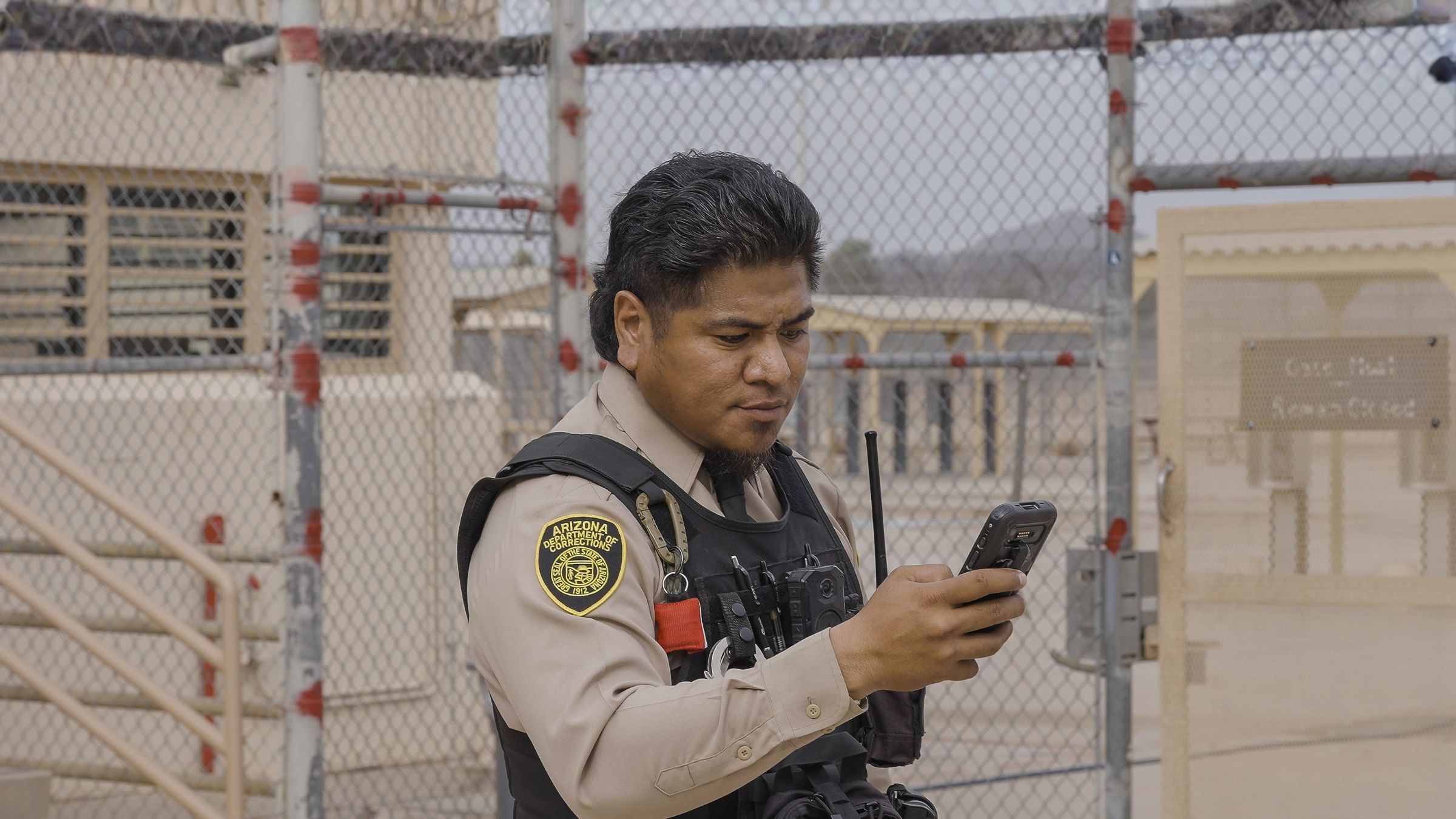
Document the Work Where the Work Happens.
SPARTAN 3 is the ultra-rugged, Android handheld your officers carry every shift, powering Mobile Command XR.
The Device Matters as Much as the Software
Documentation happens at the point of responsibility, not from memory at the end of a shift. The device in an officer's hand decides whether that happens.

Hands are full.
A clipboard, a metal wand, and a radio in a volatile housing pod. That is three things to manage and one hand left over. One device stows in a cargo pocket or a holster.

Devices quit before the shift does.
A dead battery halfway through a mandatory double means an officer stops documenting and starts remembering. SPARTAN 3 is powered for the whole shift, with a spare charging in the cradle.

Devices do not survive the floor.
Dayroom floors are unforgiving. A drop onto concrete should be a non-event, not a replacement order.
Why Agencies Trust SPARTAN 3
Battle-tested. Deployed everywhere. SPARTAN 3 has been proven the way corrections proves anything, on shift, in housing units, by officers who do not get to be careful with their equipment.
8-foot drop
Survives an 8-foot drop to concrete
12 to 14 hours
12 to 14 hours on one battery
3 years
Covered for 3 years

Four years without a credible lawsuit
"We are going on four years of not having any credible lawsuit filed against us in this highly-litigated profession, and a lot of credit is due to using the SPARTANs."
Chad Wicker, Director
Tate County (MS) Sheriff's Office

'They pick that SPARTAN up, they are empowered'
"[Our staff members] pick that SPARTAN up, they are empowered. They've got a camera at their hand. They can do their reports at their hand. They can even record a use of force right there at their hand."
Lonnie Kettler, Lt.
Smith County (TX) Sheriff's Office

Instead of pen and paper ...
"Instead of having a pen and paper, I have my SPARTAN hand-held device and I can either scan their ID card or I can go into the roster, find their name and put whatever is necessary."
Melissa Dodson, Sgt.
St. Mary's County (MD) Sheriff's Office
See SPARTAN 3 in Action
See what a shift looks like when the documentation travels with the officer.
What Is SPARTAN 3?
SPARTAN 3 is the ultra-rugged Android device corrections officers carry on shift to document what happens in custody.
Mobile Command XR runs on the device. Mission Command is the workstation side. Both live inside Command Cloud, the officer experience platform an agency runs its operation on.
The device reads RFID. GUARDIAN RFID puts those tags in places officers already touch every round: fixed Hard Tags, inmate wristbands, and ID cards.
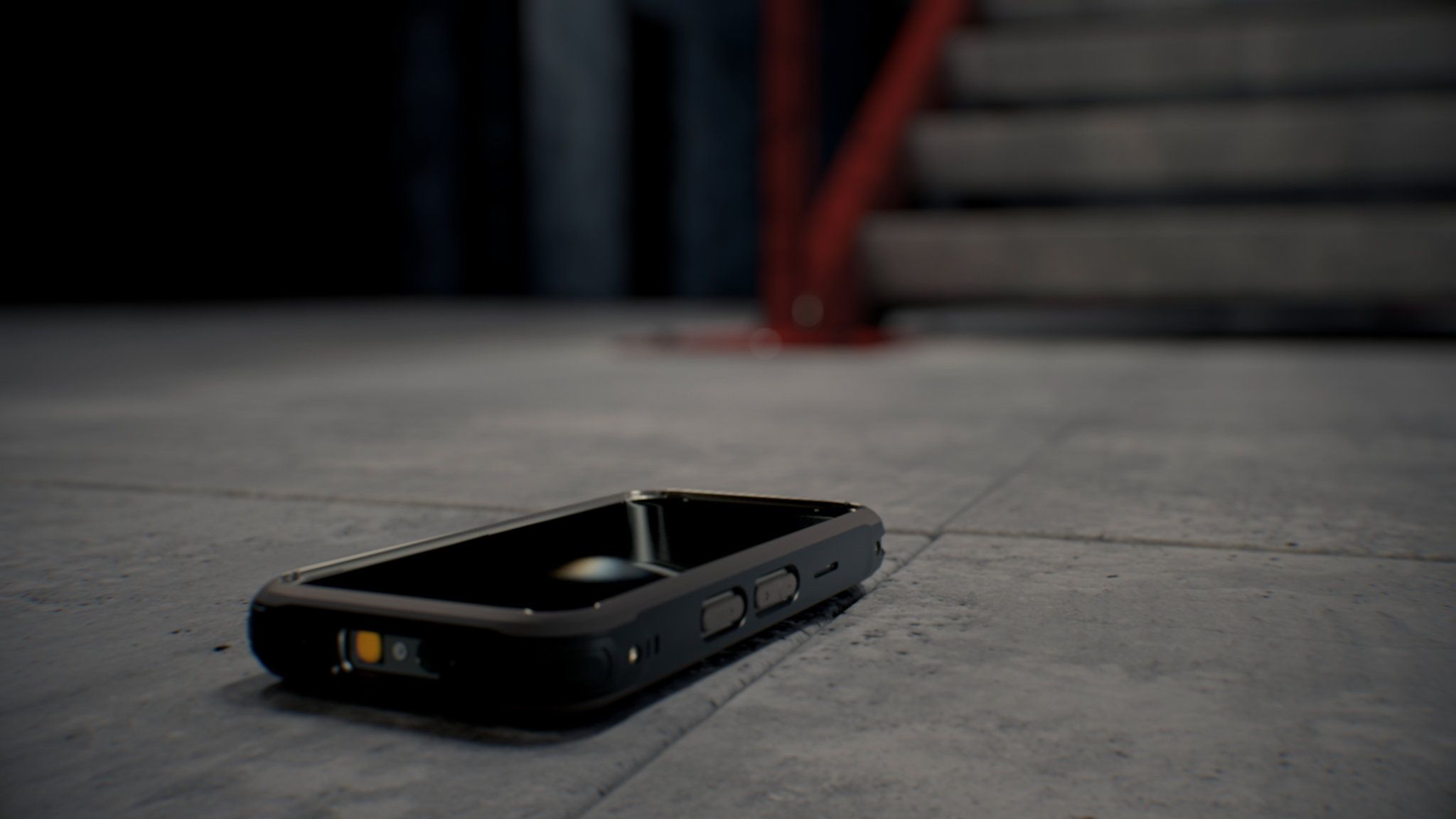
How Rugged Is Ultra-Rugged?
It survives repeated 8-foot drops onto concrete.
A front-and-back wrap. Corning Gorilla Glass. Sealed against dust and water.
Size is a durability feature, too. SPARTAN 3 stows in a cargo pocket. A pocketed device is not one left on a dayroom table. Hand strap included.
Display
5.5" HD+ (1440 x 720), TFT-IPS, Corning Gorilla Glass
CPU
Snapdragon Octa-Core 2.2 GHz
Operating system
Android
Memory
3GB RAM / 32GB storage
Size
6.5" x 3.3" x 0.73"
Weight
11.7 oz
Rear camera
13MP autofocus, f/2.0, LED flash, phase-detection autofocus
Front camera
5MP fixed focus
Battery
User-replaceable hard-pack, Li-ion 3.85V, 4350 mAh, Battery Optimization System
Runtime
12 to 14 hours of continuous use
Wi-Fi
802.11 a/b/g/n/ac, 2x2 MU-MIMO, Wi-Fi certified
Ruggedness
8 ft drop to concrete, IP68 and IP65 sealing
RFID
Reads ISO 15693 tags: Hard Tags, inmate wristbands, ID cards
Warranty
3 years, includes accident protection
In the box
Device, two batteries, one single-slot charging cradle, one hand strap
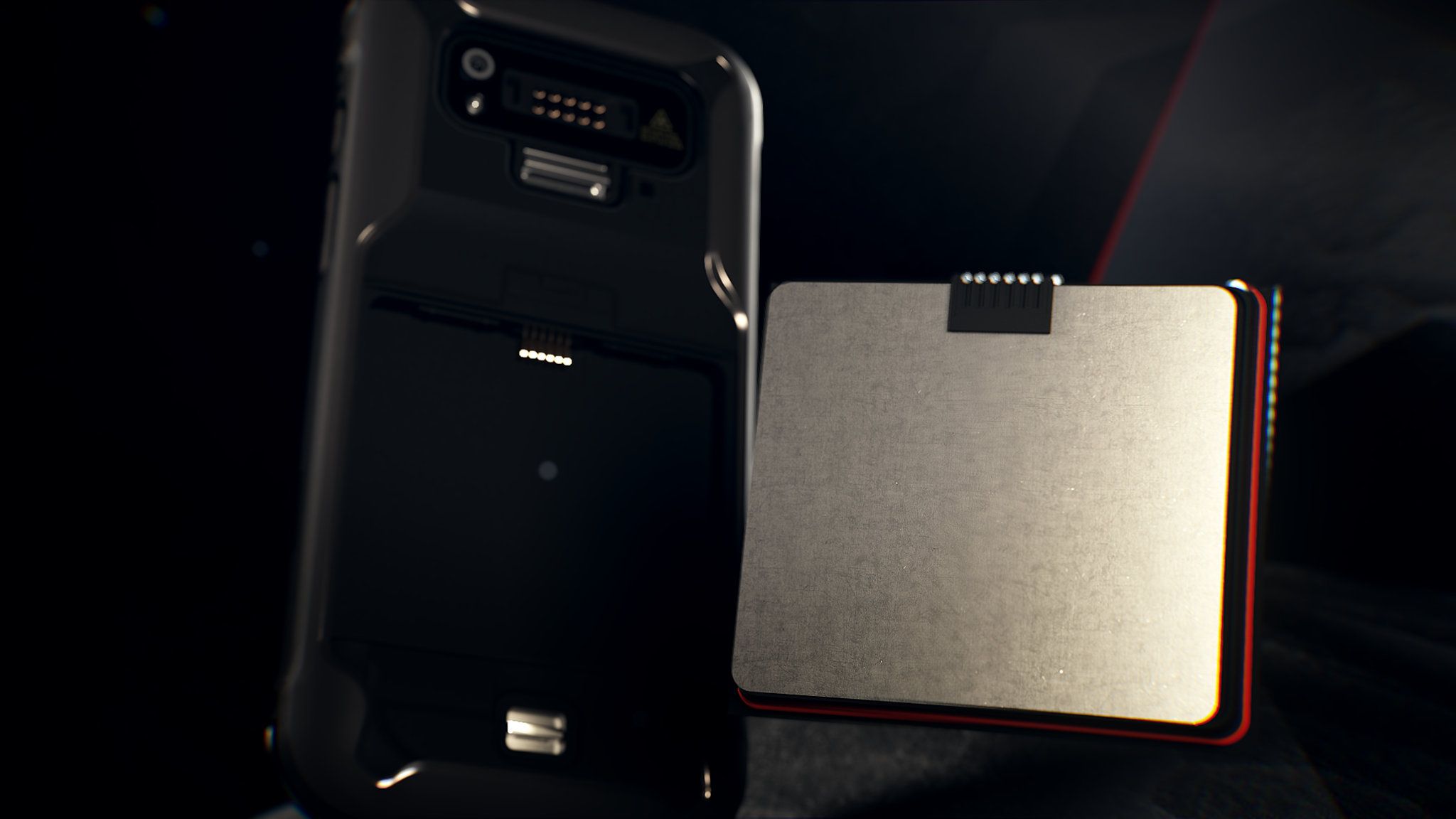
Long-Lasting Battery Life
12 to 14 hours of continuous use. That covers a standard shift and most of a double.
Every SPARTAN 3 ships with two batteries and a single-slot charging cradle. The second battery sits in the cradle, charged and ready, so a facility is never one dead unit away from an officer carrying a clipboard.
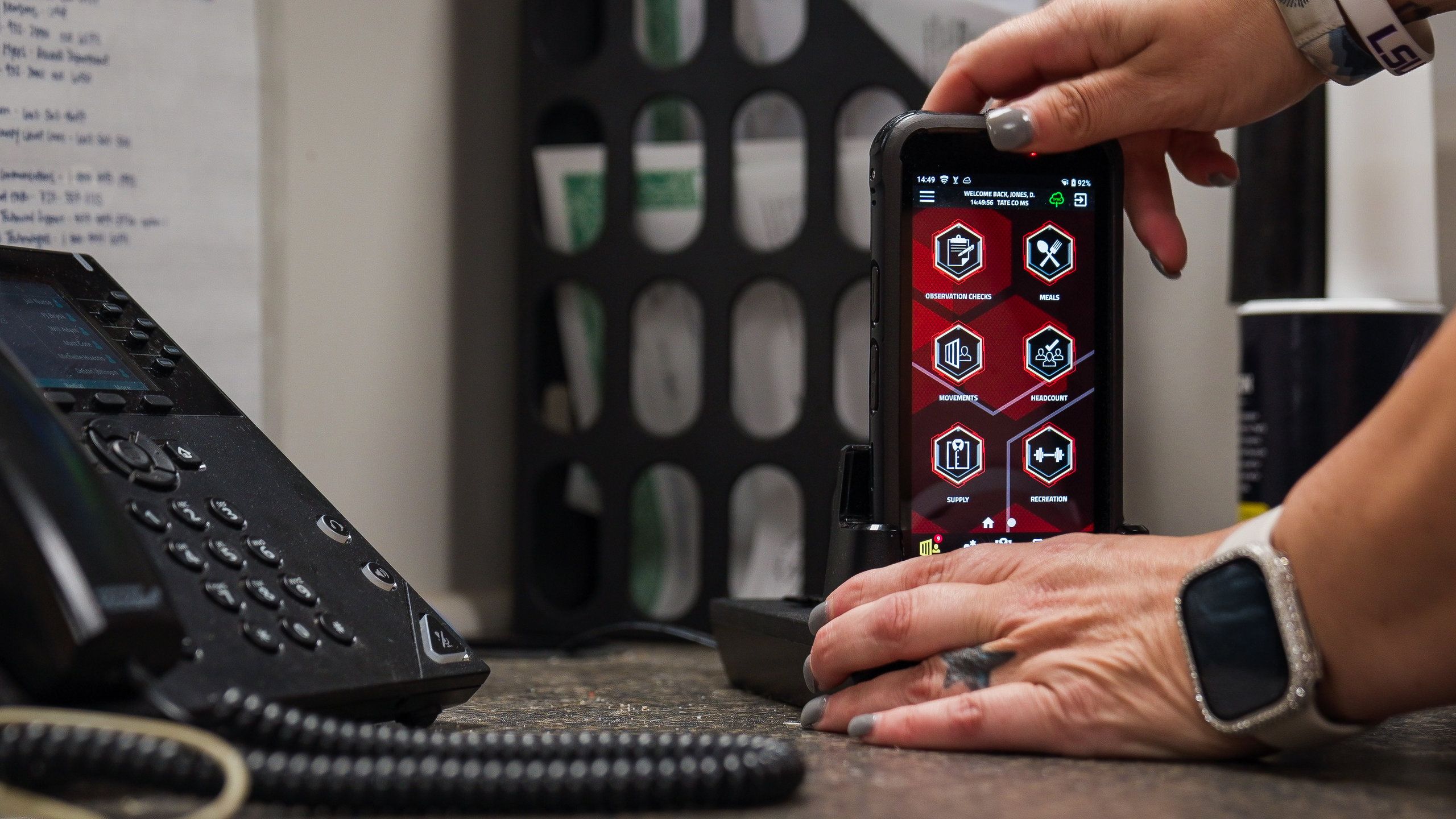
Works Without Wi-Fi
Officers keep logging, and the device retains what they capture.
SPARTAN 3 is built to hold a signal through concrete walls and crowded airwaves. Seat the unit in its Ethernet cradle and it syncs without touching Wi-Fi at all.
GUARDIAN RFID also integrates with most existing jail management systems, so housing and demographic data stays current on the device.
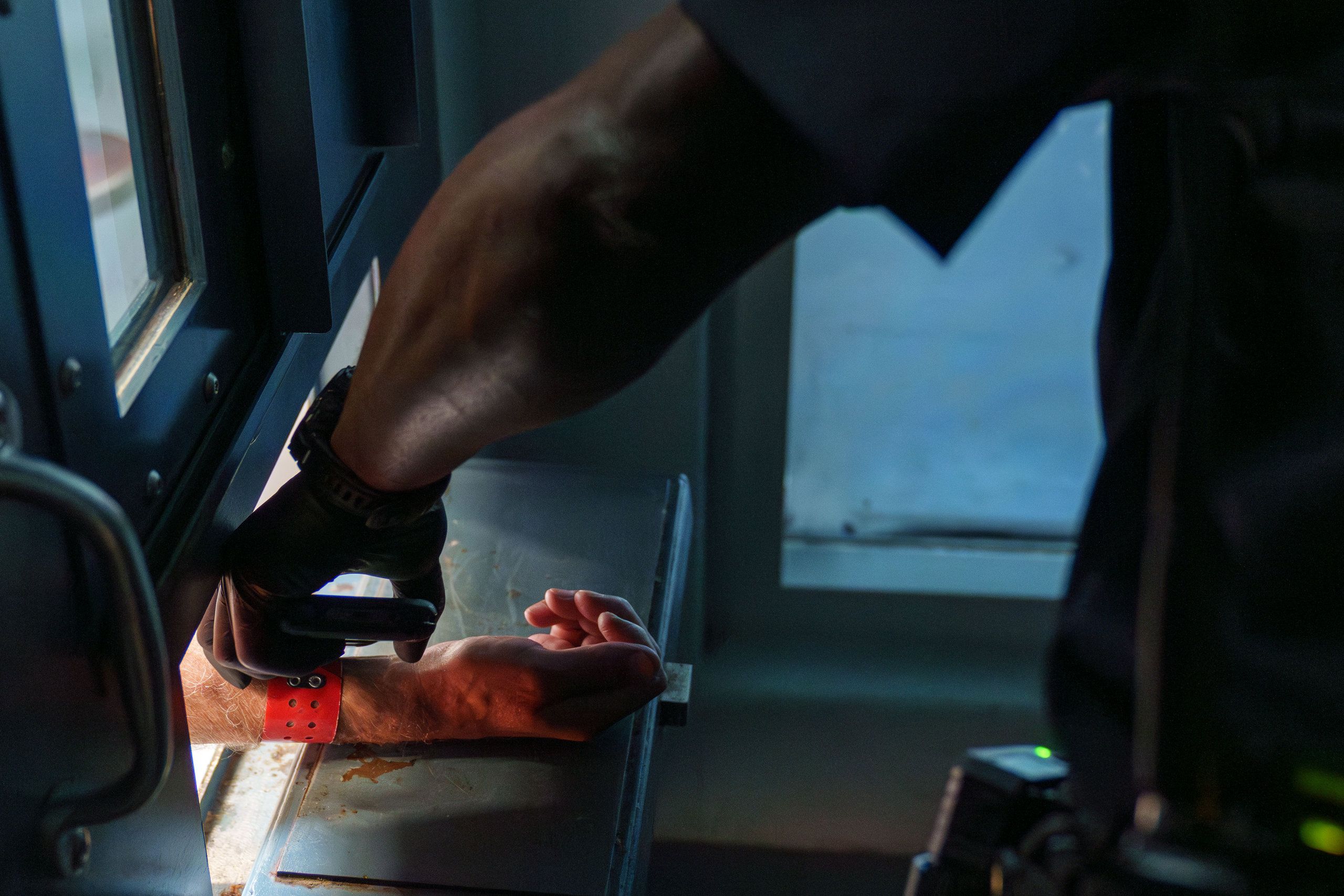
What It Reads and Captures
Three inputs: the RFID reader, the cameras, and the microphone.
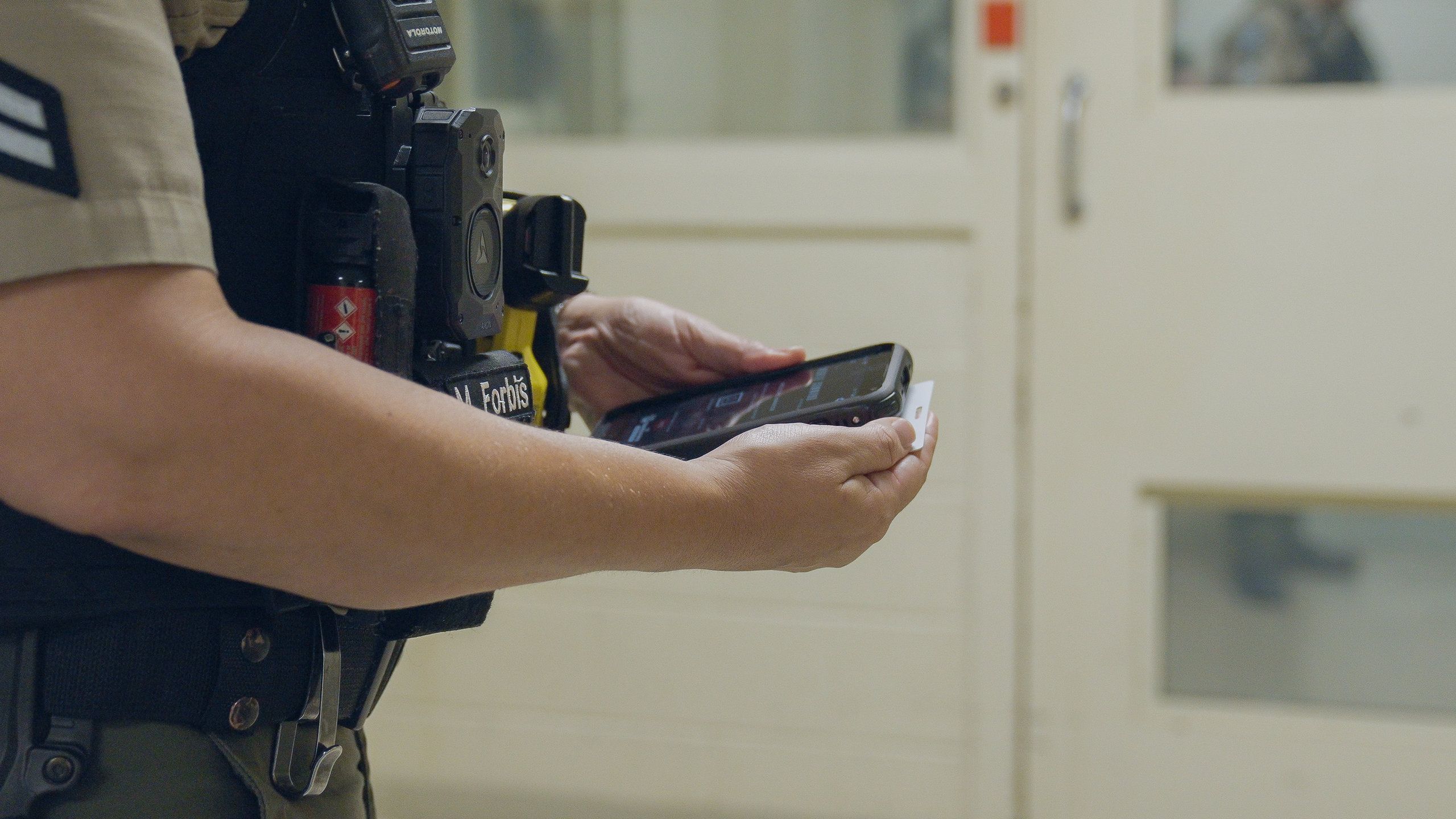
The reader handles three tag types: RFID Hard Tags fixed to walls and fixtures, RFID inmate wristbands, and inmate ID cards. An officer has to be within an inch or two of the tag for it to read. The officer has to be at the tag, and that is what makes the record defensible.
No Line of Sight Required
No line of sight required. A barcode needs a clean look at a clean label. RFID does not, which matters when a wristband is smudged, faded, or under a sleeve. Encrypted RFID cannot be duplicated. A barcode can be photocopied.
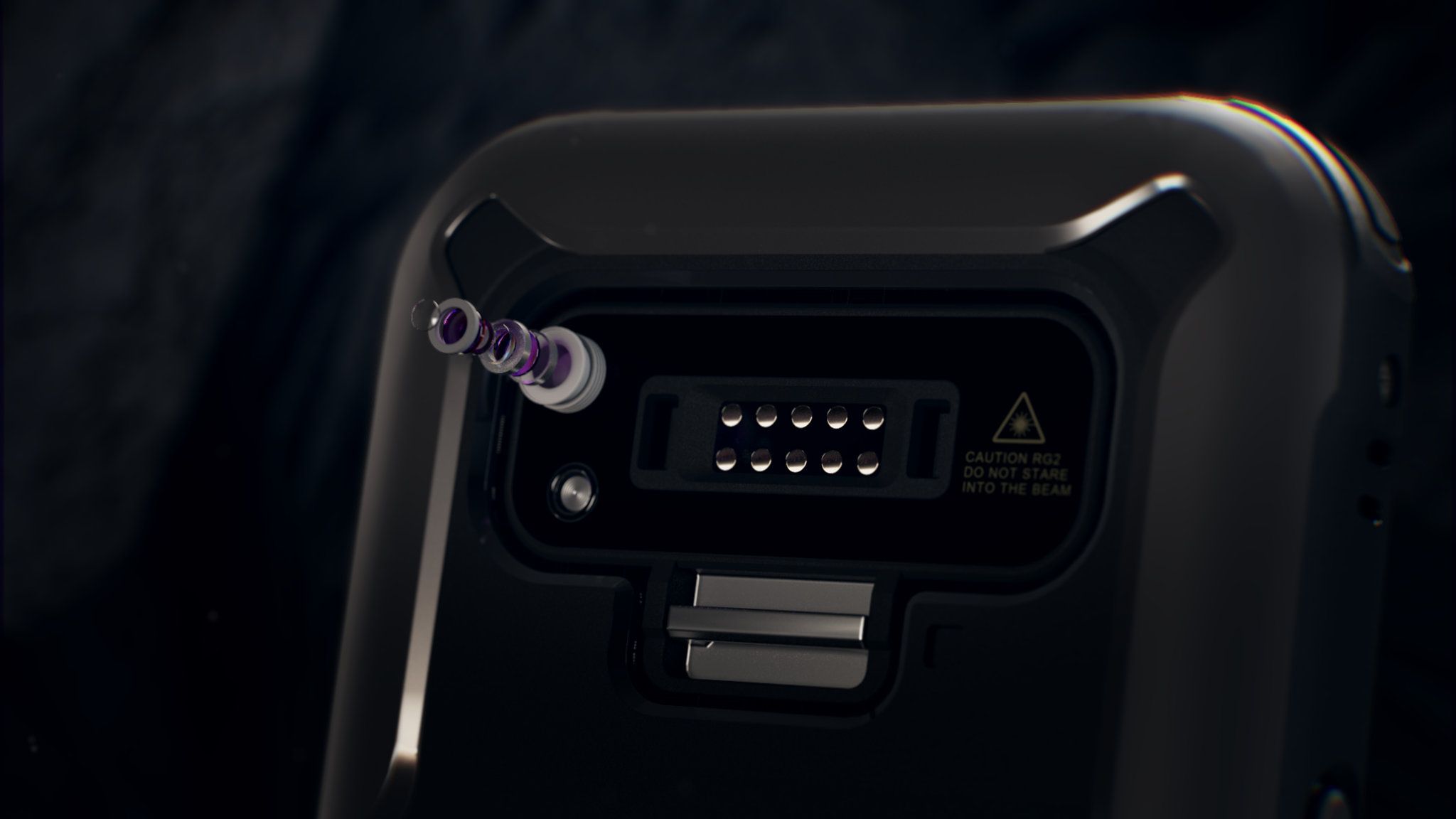
Two Cameras, Front and Rear
The rear camera focuses fast and carries a flash, which is what lets an officer photograph a dark cell at 3 a.m. and get something usable.
The front camera supports facial recognition for officer login, inmate identification, and inmate release verification.
A microphone handles voice input.
What Makes a SPARTAN 3 Record Defensible?
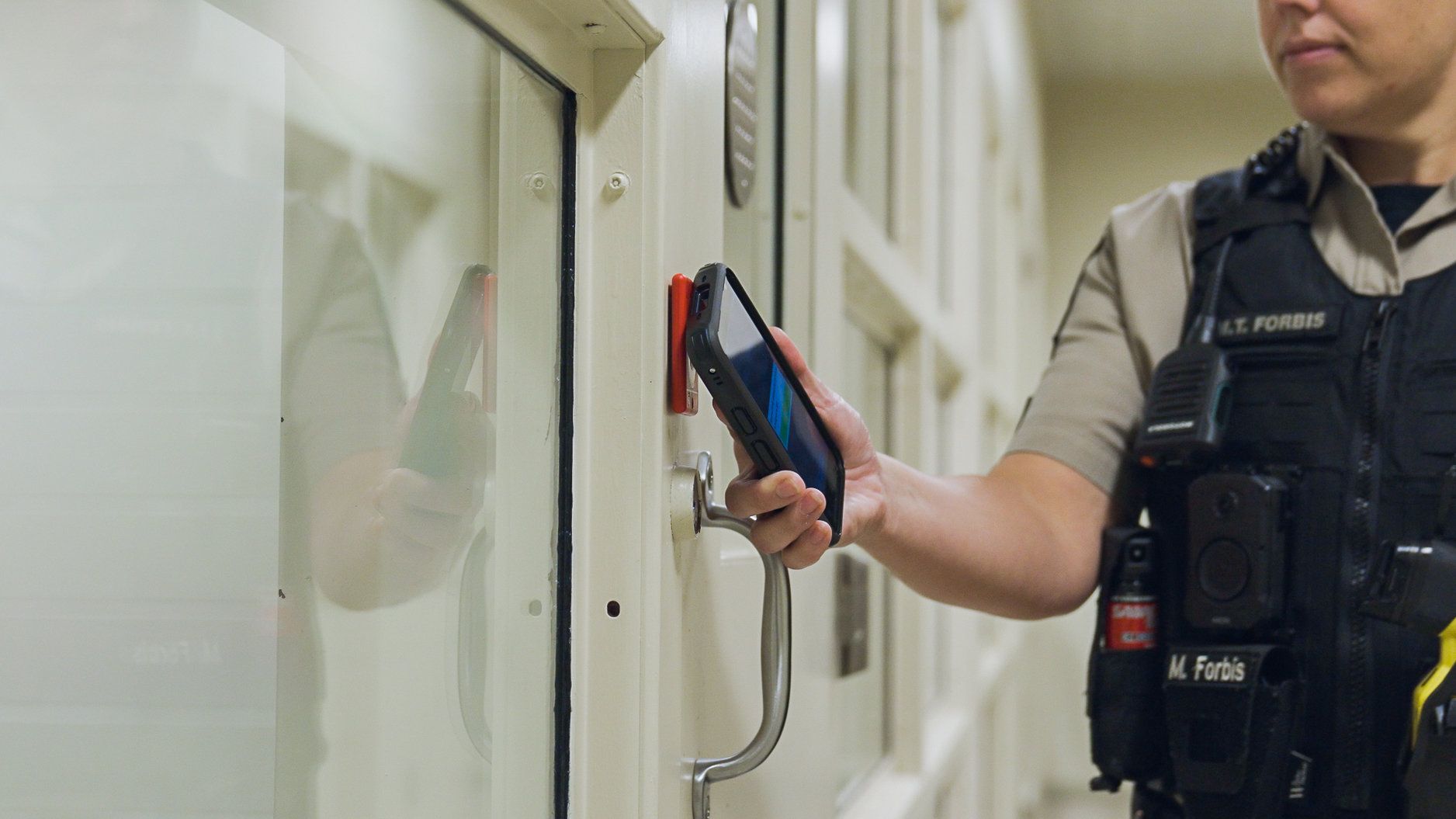
The record is made at the tag, not at the desk. An officer has to stand at the cell door for the scan to register, and it carries the time it happened.
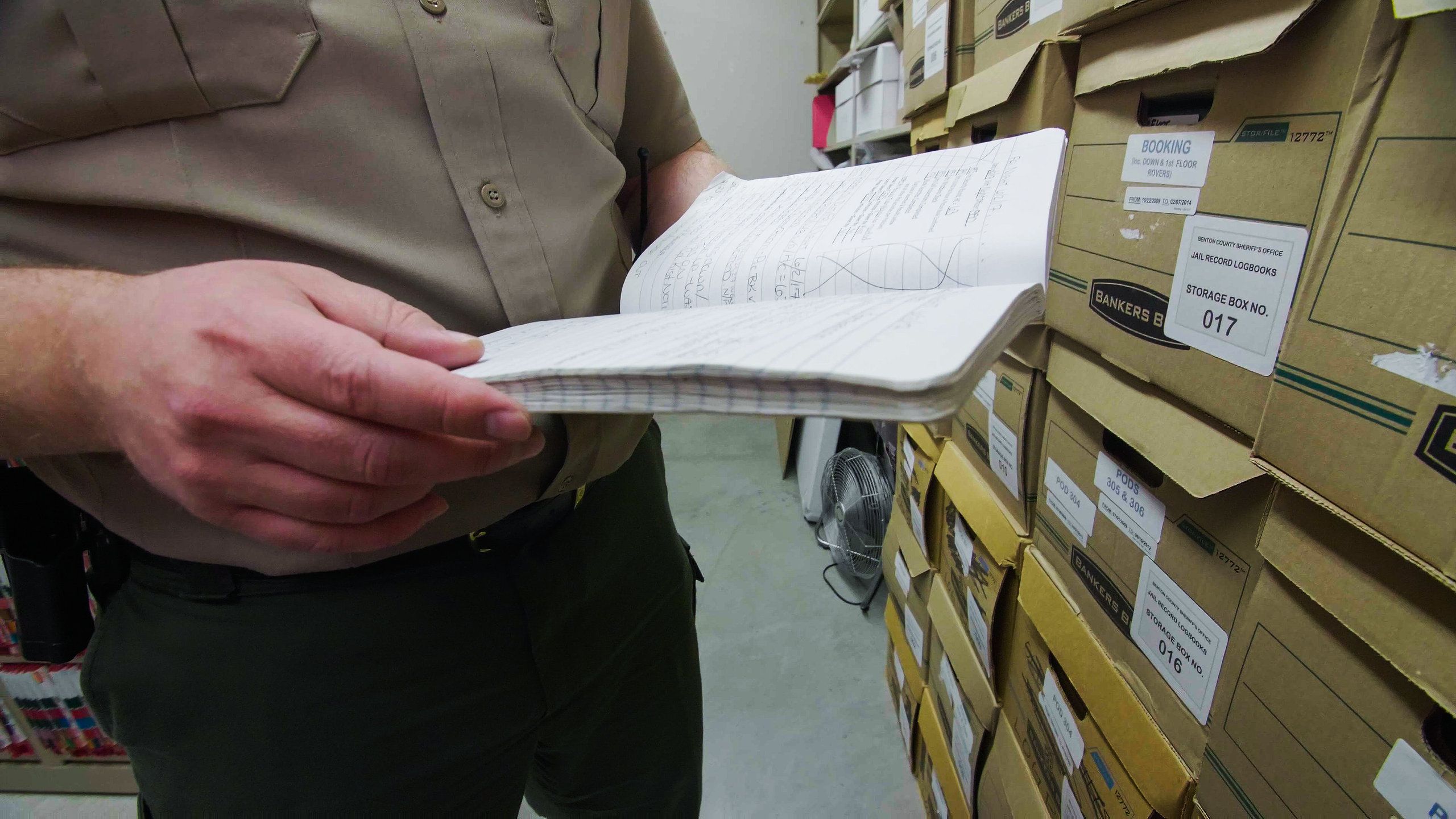
A handwritten log carries only what someone remembered after the fact. Photos and voice notes ensure nothing gets reconstructed at the end of a shift.
When an agency has to prove a round happened, the answer is the scan, the time, and the picture. That beats defending a signature.
What Software Runs the Device?
Mobile Command XR runs on the device. It is what turns a scan, a photo, or a spoken note into a record that holds up.
Mission Command is the workstation side. Command staff sees on a browser what officers capture in the housing unit.
Both sit inside Command Cloud, the officer experience platform.
How Does It Compare to Guard Tour Systems or Paper Logs?
Paper logs capture nothing you can verify. A handwritten time is a claim, not evidence, written from memory at the end of a shift.
A guard tour system proves someone was present. Not what the officer saw. Not what he found.
Some systems read at 100 to 300 feet and call that presence. A scan at the tag proves the officer stood at the door. That survives a deposition. A signal from across a pod does not.
| Capability | Paper log | Guard tour system | SPARTAN 3 |
|---|---|---|---|
|
Proof of presence |
No; handwritten, unverifiable |
Yes, at the checkpoint |
Yes, RFID scan at the tag |
|
Reads without line of sight |
No |
Varies by system |
Yes |
|
Photo and video capture |
No |
No |
Yes, photo and video |
|
Voice capture |
No |
No |
Yes, on-device microphone |
|
Inmate identification |
By name, from memory |
Limited |
Wristband or ID card scan |
|
Survives an 8-foot drop |
Yes |
Varies |
Yes, 8 feet to concrete |
|
Holds data with no Wi-Fi |
Yes |
Yes |
Yes, syncs on return or in cradle |
|
Record can be duplicated |
Yes |
Limited |
No, RFID cannot be photocopied |
What It Costs, and What's Included
SPARTAN 3 is not a separate purchase. Handhelds come with your Command Cloud license, and the count scales with your facility's Average Daily Population. Most agencies start between 2 and 12 devices.
Every unit ships with two batteries, a single-slot charging cradle, and a hand strap.
Need more than your license includes? Lease one for $700 a year or purchase one for $1,195. Leasing covers the hardware refresh cycle, so the device never ages out on your agency.
The warranty runs three years and covers manufacturer defects. If a unit gets damaged, we assess it individually and send you a loaner while yours is out.
See What Your Agency Would Pay
Enter your Average Daily Population and see what Command Cloud costs your agency, SPARTAN 3 included.
Frequently Asked Questions
12 to 14 hours of continuous use. Every SPARTAN 3 ships with two batteries and a single-slot charging cradle, so a second battery is always charged and ready. The cradle indicator shows red for charging, gold for a charging obstruction, and green for charged. Keeping the device in the cradle when it is not in a hand extends the life of the battery inventory.
Yes. SPARTAN 3 blocks every other app behind an admin code and is managed centrally. The point is removing distraction, not restricting officers. No notifications, no browser, and no personal apps competing for attention in a housing unit where attention is safety. The second benefit is that an agency is issuing a purpose-built tool rather than handing out a personal smartphone.
No. SPARTAN 3 and Command Cloud are the system of execution, capturing what happens after the cell door closes. A jail management system is the system of record, handling booking, records, and court dates. GUARDIAN RFID integrates with most existing jail management systems and pushes compliance data back into them. An agency keeps the JMS it already runs.
Every SPARTAN 3 carries a 3-year warranty through GUARDIAN RFID, on both conventional and FutureProof lease contracts. If a device needs repair, our support team reviews it first. Some issues are software-related and get fixed remotely, no shipping required. If a unit does need to come in, repairs happen in-house and are usually completed the day we receive it. If a warranty device can't be repaired, we replace it free of charge. Loaners are available on request for facilities that need one while a unit is out.
Three years, including accident protection. Coverage is identical whether the device was purchased outright or on a subscription. Accidental damage is assessed individually by technical support rather than automatically excluded, and a determination is made per incident. The FutureProof subscription separately covers the hardware refresh cycle, so an agency is not carrying aging devices at the end of a term.