5 Common Problems that Medication Manager for Command Cloud Solves
Missed doses, disputed refusals, and allergy errors put jails at medical and legal risk. This article walks through five common inmate medication management problems and how Medication Manager for Command Cloud addresses each one with digital records at the point of care.
Kenzie Rauscher
20 October 2026
Key Takeaways
About 4 in 10 jail inmates report a current chronic condition (BJS, 2015), so inmate medication management is a daily, shift-by-shift responsibility.
A refusal that isn’t signed and timestamped at the point of care is a refusal the facility can’t prove later.
Allergy and restriction data has to reach the officer conducting the med pass, not just the medical file.
Over-the-counter (OTC) passes and medication-assisted treatment (MAT) doses need the same documentation discipline as prescriptions.
What Is Inmate Medication Management?
Inmate medication management is the process a jail uses to order, store, administer, and document every dose given to the people in its custody. It matters because a missed dose, a wrong dose, or an undocumented refusal can become a medical emergency or a lawsuit, and the medication record is often the facility’s best evidence of the care it provided.
In a national survey by the Bureau of Justice Statistics (BJS), 40% of jail inmates reported a current chronic condition, and about 40% of those inmates were receiving prescription medication (BJS, survey conducted in 2011 and 2012, published 2015). Every one of those doses has to reach the right person at the right time, and the record of it has to hold up if anyone challenges it later.
The med pass is one of the most critical and legally sensitive periods of the day. Yet many agencies still rely on fragmented, paper-based systems that are prone to human error, missed doses, and documentation gaps. When a dose gets lost in translation, the result can be a medical emergency or a costly lawsuit, which makes a reliable system of record a necessity for facility safety.
Medication Manager for Command Cloud is a secure, cloud-based tool for inmate medication management in correctional facilities. Built for institutional healthcare, it gives staff the tools to order, administer, and track medications with precision, keeping accuracy and inmate safety at the center of every step.
Below are five common inmate medication management problems jails face and how Medication Manager for Command Cloud addresses each one.
1. How Do I Know When It’s Time to Administer Medications?
Problem: Many facilities lack a real-time, centralized system to track when inmates last received their medications and when the next pass is due. Without that visibility, staff rely on memory or handwritten logs. In a busy jail, that gap leads to double doses, doses given outside the required window, or doses missed altogether.
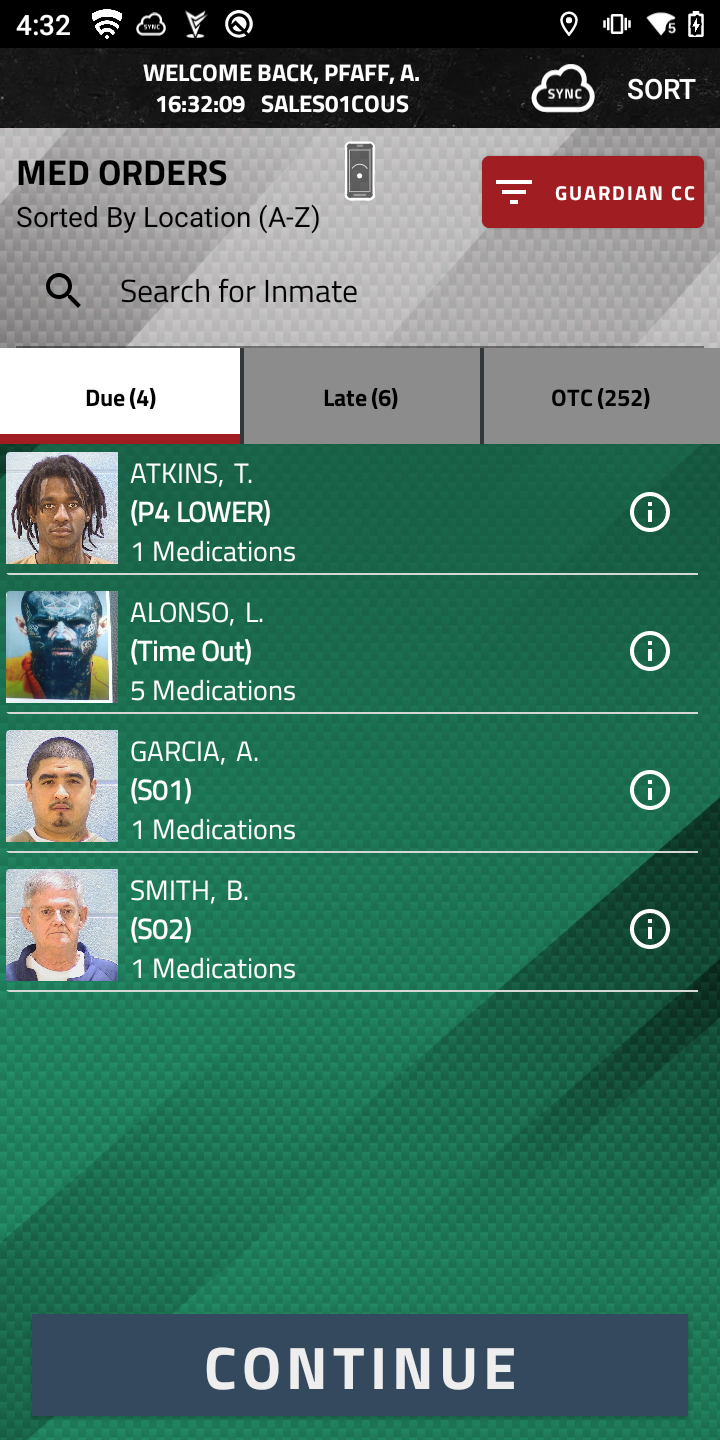
Solution: From the Medication Manager module within Mobile Command XR, Command Cloud’s mobile inmate tracking software that operates on SPARTAN, staff can oversee upcoming medication passes and manage administration in real time. To help staff quickly find specific medication status information, the module is organized into three main tabs: Due, Late, and Over-the-Counter (OTC).
Order Status | Description |
|---|---|
Due | This tab displays all active medications or vital measurement checks still within their allowable administration window, before they become late or missed. This window is determined by the before delivery, after delivery, and target delivery times set when the medication order is created. |
Late | This tab shows active medication orders that have surpassed the allotted administration window. They remain in the Late tab until the next scheduled med pass for the order begins or the med order ends, at which point they become a “Missed” pass. |
OTC | Users can switch to the OTC tab to document over-the-counter medication passes. After selecting the intended inmate, the medication administrator can choose from flagged OTC medication Wordblocks. |
2. Can My Documentation Prove Inmate Disputes to Be False?
Problem: Inmate disputes regarding medical care are a constant threat to facility defensibility. A common claim is that staff failed to provide medication. Without a verifiable chain of custody or documented proof of refusal, facilities are left legally vulnerable to allegations of medical neglect.
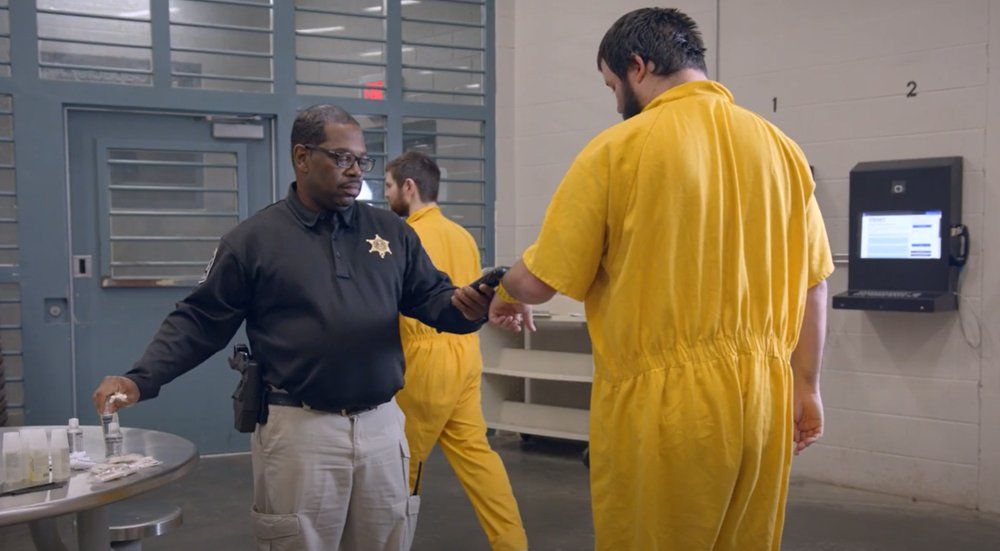
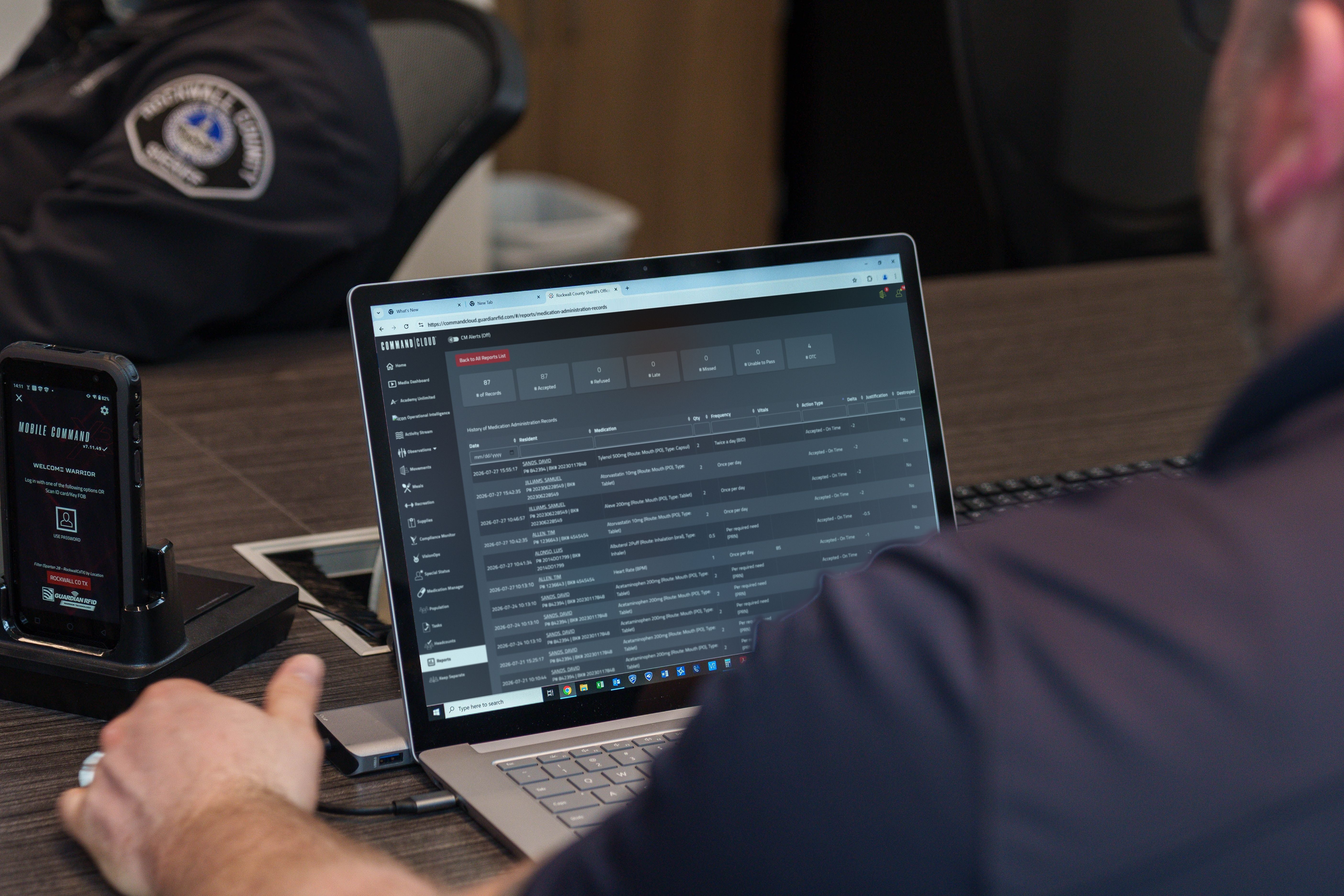
Solution: Medication Manager for Command Cloud moves the verification process to the point of care. The system can be configured to require a digital signature from the inmate for every dose accepted or declined. Every interaction is timestamped and logged, so administrators can pull a Medication Administration Record (MAR) report and answer false claims with objective evidence.
Sheriff Dan Mawhorr of Adams County, Indiana, says documenting med refusals in Command Cloud has changed how those disputes end. “It’s saving me a lot of litigation because they will say, ‘Well, I didn’t refuse my meds.’ Well, here it is,” he said.
“It’s saving me a lot of litigation because they will say, ‘Well, I didn’t refuse my meds.’ Well, here it is.”
Sheriff Dan Mawhorr, Adams County, Indiana
3. How Can I Be Made Aware of Inmate Medication Allergies?
Problem: Inmates frequently enter custody with a range of allergies. With a manual medication tracking system, the officer conducting the pass may not have the inmate’s medical file on hand. Giving a medication that triggers an allergic reaction isn’t just a medical emergency. It’s a serious liability.
Solution: Medication Manager for Command Cloud connects medical records to the med pass. Allergy information documented in Mission Command (the Command Cloud desktop application that gives users a common operating picture) syncs to Mobile Command XR. Before administering a dose, officers can view the inmate’s digital "baseball card" on the screen of their SPARTAN, which highlights all medical restrictions, such as "no latex" or "ibuprofen allergy."
4. How Can My Team Effectively Track Over-the-Counter Medications?
Problem: Over-the-counter (OTC) medications are often treated with less rigor than prescriptions. Without clear documentation, staff can’t effectively track whether inmates are exceeding safe daily limits or identifying patterns of misuse.
Solution: Medication Manager for Command Cloud includes a dedicated OTC tab that separates these passes from prescriptions while keeping the same level of oversight. When an OTC medication is created, administrators can set "elapsed times” stating the time between doses. If a user tries to administer a dose within the elapsed time, they receive a “Too Soon from Last Dose Given” notification and must provide a justification.

5. How Can My Team’s Documentation Support MAT Program Compliance?
Problem: Opioid settlement funds are helping many jails start or expand medication-assisted treatment (MAT) programs for people with opioid use disorder (OUD). Funders and oversight bodies expect clear documentation of how a facility orders, stores, and administers OUD medications, and a program that can’t produce that record is harder to fund and defend.
Solution: Medication Manager for Command Cloud is an auditor’s best friend. With prebuilt, exportable reports, including MARs, Medication Inventory, and Order History, facilities can generate PDF or CSV files to demonstrate compliance. That transparency makes it simple to share data with external healthcare providers and show that the facility maintains the required standard of care for inmates with OUD.
Frequently Asked Questions
What is the primary benefit of Medication Manager for Command Cloud?
It brings the full medication lifecycle, from order creation to administration, into a single, verifiable digital record. That record helps reduce human error and gives the facility the documentation to defend every med pass.
How does Medication Manager for Command Cloud impact officer burnout?
By automating the logging process and providing real-time alerts, Medication Manager for Command Cloud reduces the mental load of manual tracking, so officers can focus on the housing unit in front of them instead of searching through piles of paper logs.
Is Inmate Data Secure in Command Cloud?
Yes. Command Cloud is hosted on AWS GovCloud, maintains compliance with the CJIS Security Policy, and holds a SOC 2 Type II attestation.

Inmate medication management takes accountability and security in equal measure. Medication Manager for Command Cloud addresses the challenges correctional facilities face every day by replacing paper processes with mobile technology and secure digital records.
That gives corrections staff a way to reduce human error, support better health outcomes for the people in their care, and build the documentation that protects the facility when a med pass is challenged. For more on the records behind these workflows, read how to improve MAR reporting in your facility and how to keep inmate medication inventory counts accurate.
Want a closer look at how Medication Manager for Command Cloud handles every step, from the initial prescription to the final dose?
Download The Ultimate Guide to Medication Manager for Command Cloud
You may also like these
Related Posts
How Can My Team Keep Inmate Medication Inventory Counts Accurate?
How to Improve MAR Reporting in Your Facility